
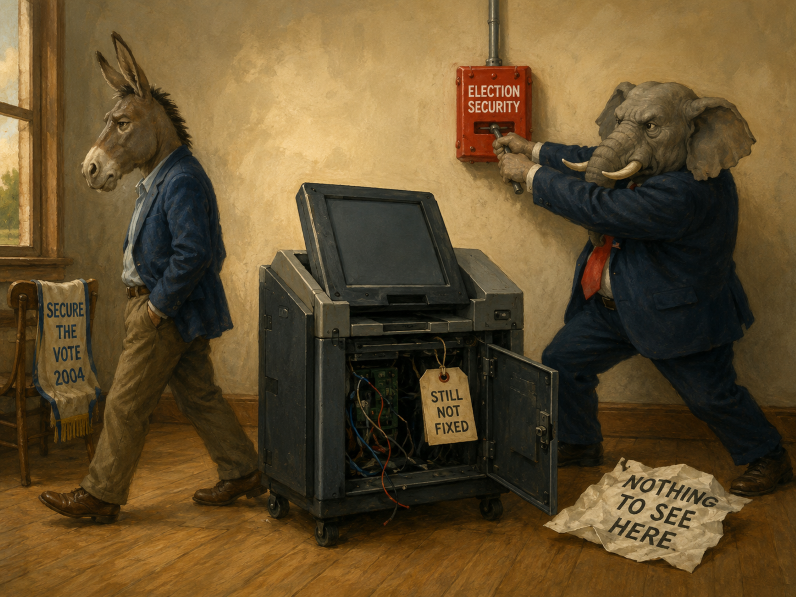
How Election Security Became a Republican Issue
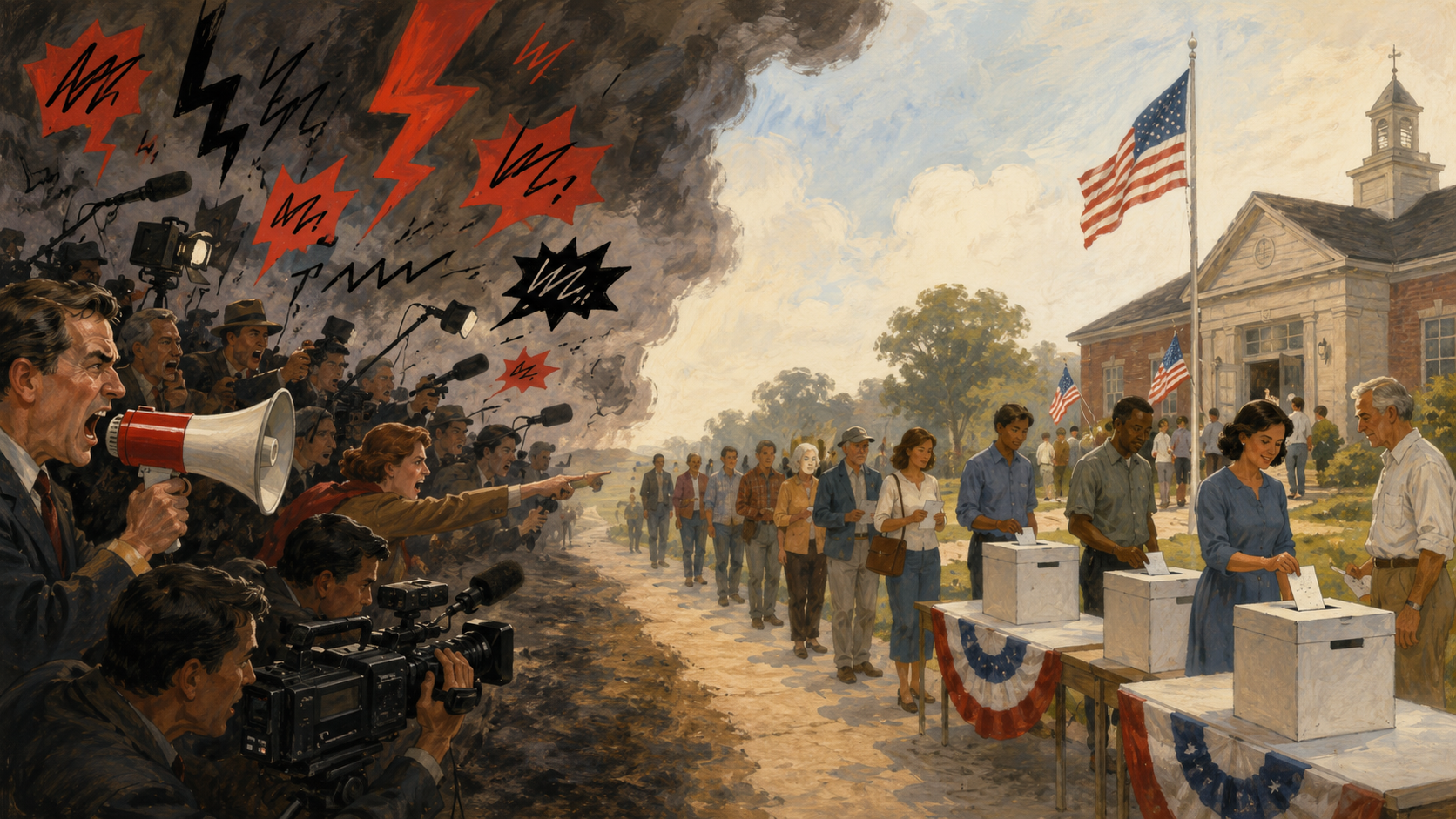
Election security alarm has switched parties with every losing side. The vulnerabilities are real, exploitation is undemonstrated, and the SAVE Act fight shows both parties prefer the fight to the fix.
Election security alarm has switched parties with every losing side. The vulnerabilities are real, exploitation is undemonstrated, and the SAVE Act fight shows both parties prefer the fight to the fix.
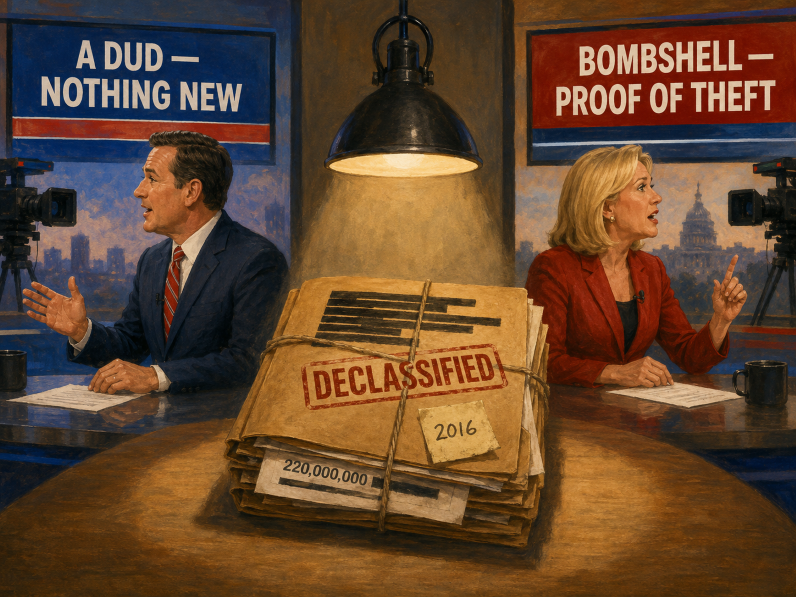
Mainstream coverage framed the July 16 release as old, public data. Conservative coverage framed it as proof of theft. The documents contradict both — and no major outlet read them closely enough to notice.
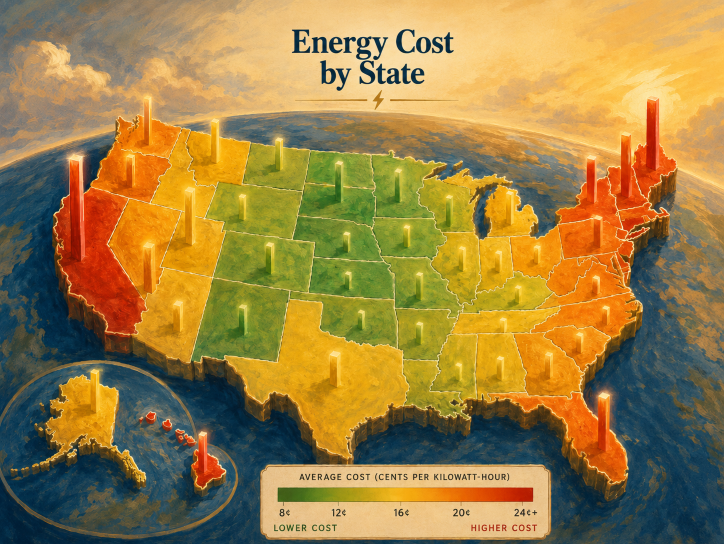
American electricity prices vary by nearly fourfold across states. Geography sets the range; policy choices — mandates, permitting, and procurement — determine where a state lands within it. The partisan gap is real and substantially chosen.

The crude headlines were accurate and the impression was false: oil returned to pre-war prices the same week diesel refining margins hit records and Russia banned exports. Crude tracks the war. Diesel tracks what's coming for readers' bills.
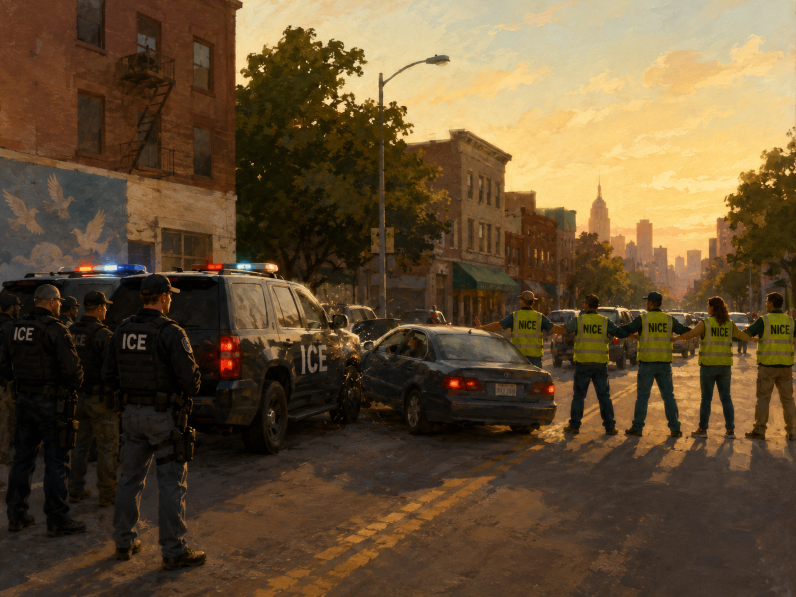
ABC accurately reports the family's grief and ICE's claims but omits the fact neither side disputes — the van did not stop — and the investigative and use-of-force context readers need to weigh either account.
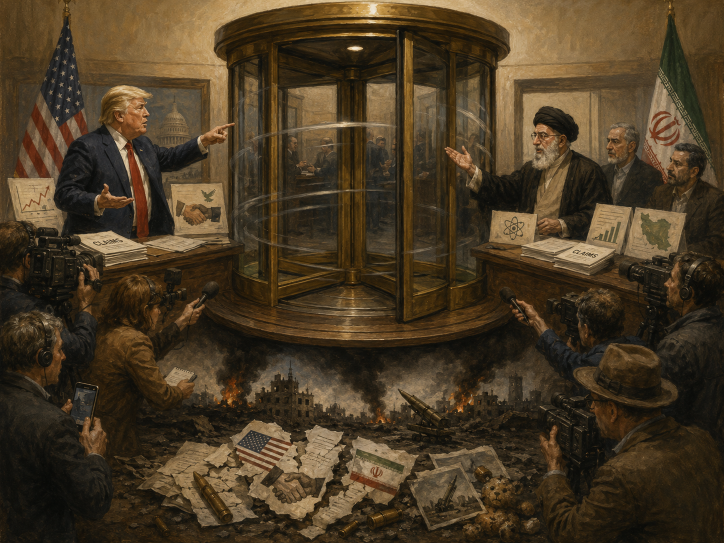
Trump claims Iran has "agreed to just about everything we need." The signed MOU defers every hard issue to future talks, and Iran drone-attacked two tankers days earlier. Coverage relayed the claim without checking the public text.
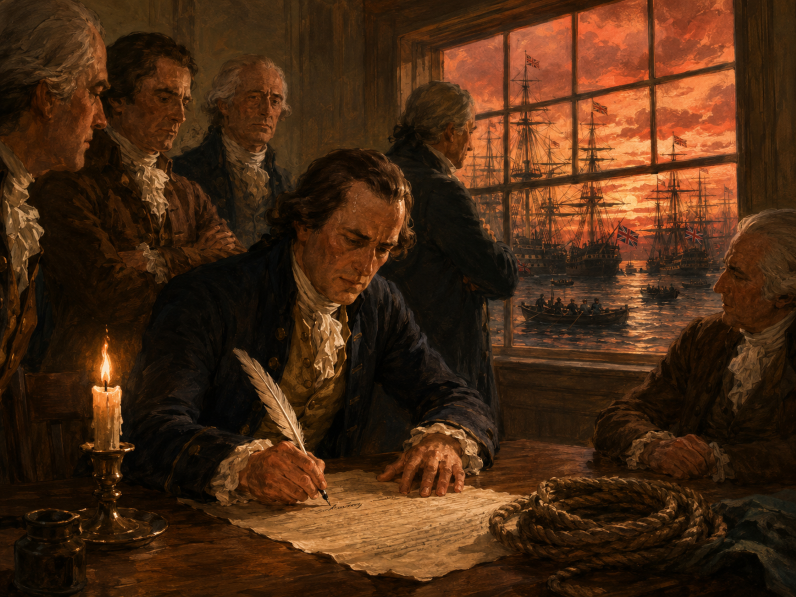
America's 100th, 150th, and 200th anniversaries each arrived amid deep division and low national confidence. The 250th continues that pattern, with one measurable difference: national pride itself has become a partisan marker.
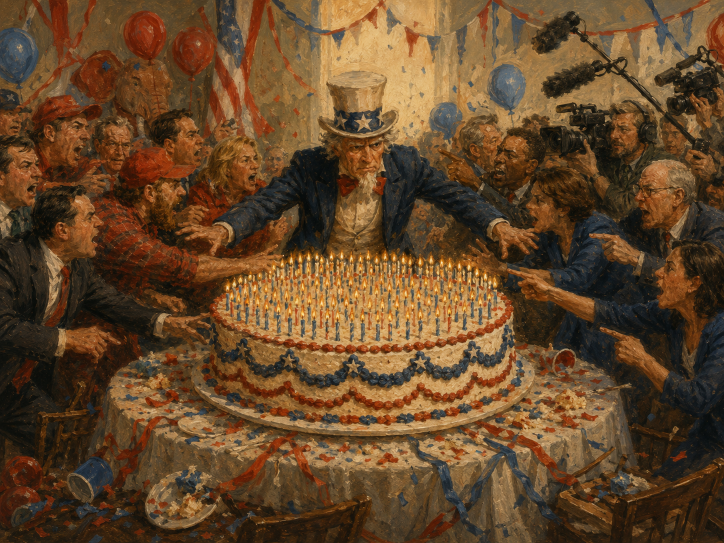
CNN frames a two-sided institutional fight as a one-directional "takeover." The funding law never named America250, the chair recommended the executive order, and the commission's own scandal history is absent.
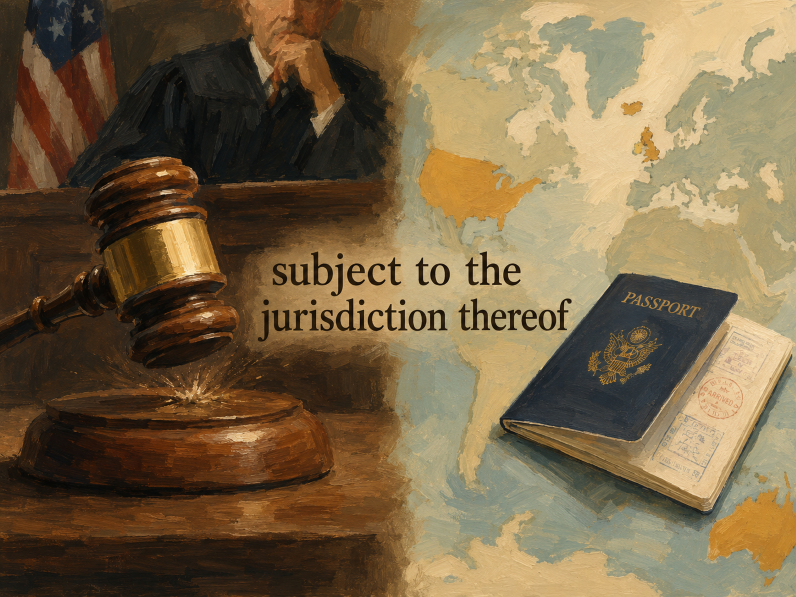
The ruling was 5-4 on the constitutional question. A legislative path remains open. The originalist argument has three sitting justices behind it. None of that made the headlines.
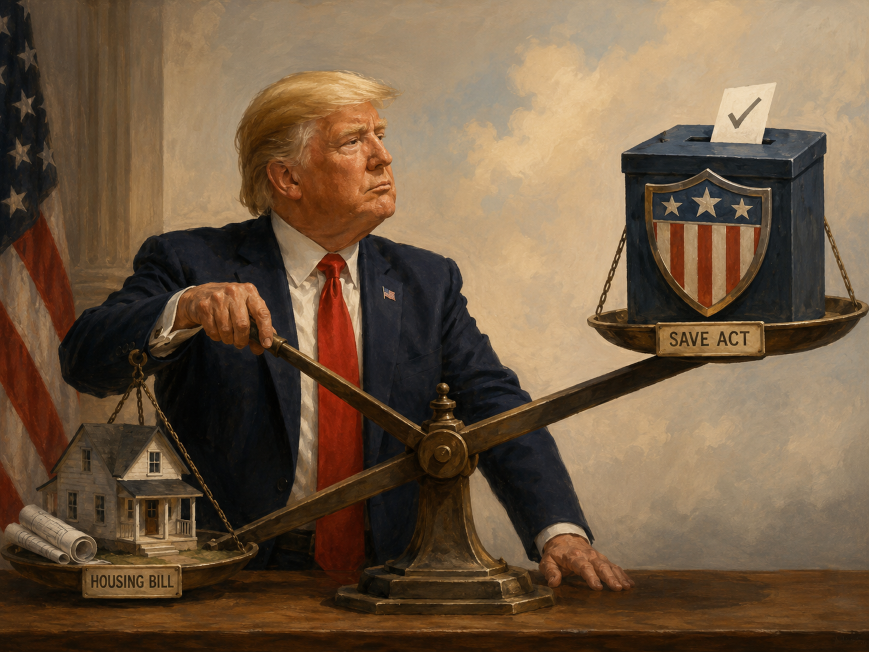
NBC buried the veto math, ignored the SAVE Act's 84% polling support, and built its Republican revolt narrative around senators their own voters just rejected — one of whom had reversed course before the day was over.
Readers who picked up this review expecting a serious engagement with J.D. Vance's account of his faith journey got something else entirely — a politically motivated verdict wrapped in literary prose, applied theology the writer does not understand, and factual claims about the book that the book is never asked to support. The Economist is entitled to dislike Vance's politics. It is not entitled to call that dislike a book review.
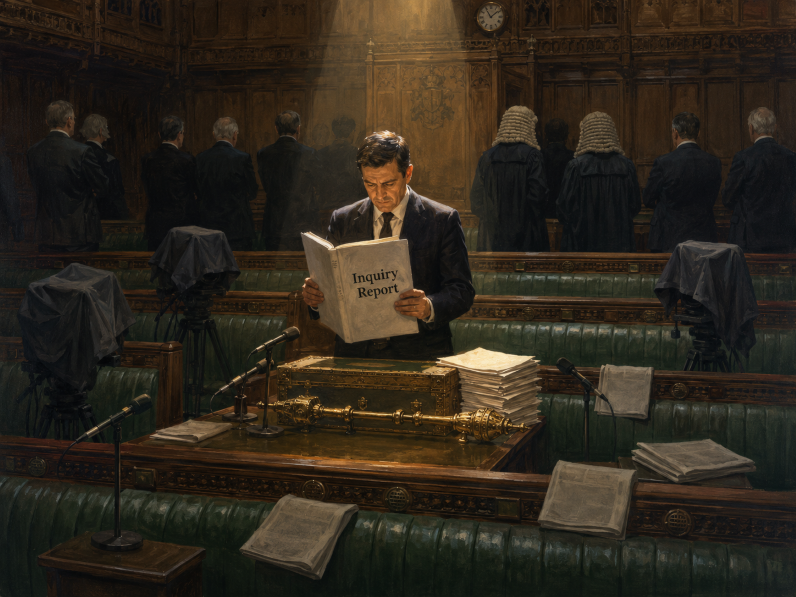
Readers deserved to know that a sitting British MP released the most comprehensive independent investigation into organized child rape in UK history, that it implicated the police forces, prosecutors, councils, NHS services, and the political party currently governing the country, and that the national broadcaster funded by public licence fees — the same broadcaster that devoted live coverage and prime-time programming to a government-commissioned audit covering the same crimes — chose to publish nothing. They deserved to know that the Prime Minister who now oversees the statutory inquiry ran the Crown Prosecution Service while it decided rape victims were not credible witnesses, whipped his entire parliamentary majority to vote down accountability, called everyone demanding that accountability a far-right agitator, and reversed course only when the political cost of silence became too high. And they deserved to know that the institutions now being asked to investigate and correct these failures are the same institutions the report documents as having driven them — which is precisely why a crowdfunded citizens' inquiry led by a survivor existed in the first place, and precisely why the press that ignored it should be held to account for that choice.
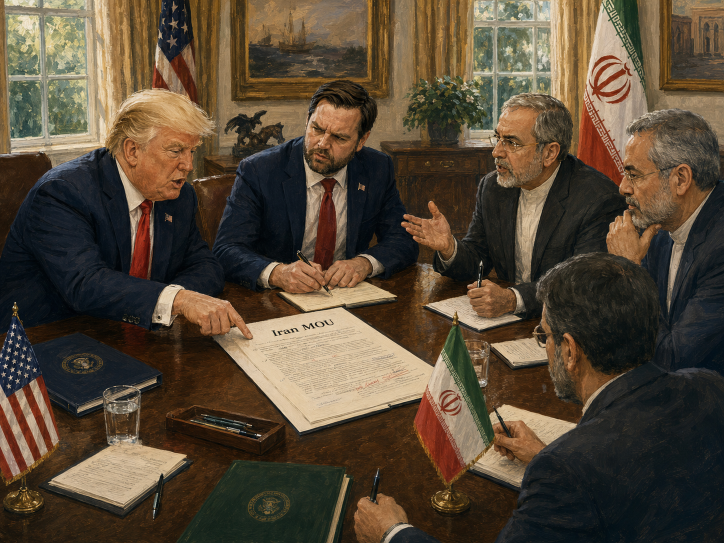
Cohen's frustration with the White House spin is understandable, and some of his specific criticisms — the proxy gap, the Strait framing, the signed document claim — are accurate. But he undermines his own credibility by misreading the $300 billion planning commitment as a payment, applying a missile standard to Trump's deal that Obama's deal also failed, and presenting JCPOA verification as a success story while stopping the timeline before the outcome that proves it wasn't. Readers deserved a critique that was as rigorous about its own evidence as it demanded the White House be about theirs. At the end of the day, We won't know the finer details until later. Hopefully the White House has a plan for these gaps.

Readers deserved to know that the Embryo Adoption Awareness program was built on the same ideological foundation HuffPost is now treating as a recent contamination. They deserved to know that the program's primary grantees have excluded LGBTQ+ families since before Barack Obama's first term. They deserved to know that their primary sources represent an advocacy organization with a declared position on abortion, and that the IVF threat being warned about is, by those same sources' own admission, speculative at this stage. The language change in the grant is real. What HuffPost is actually defending — without saying so — is the terminological framework that keeps embryos below the threshold of personhood, because that framework is load-bearing for the broader abortion debate. That is the story underneath this story. Readers never got to read it.
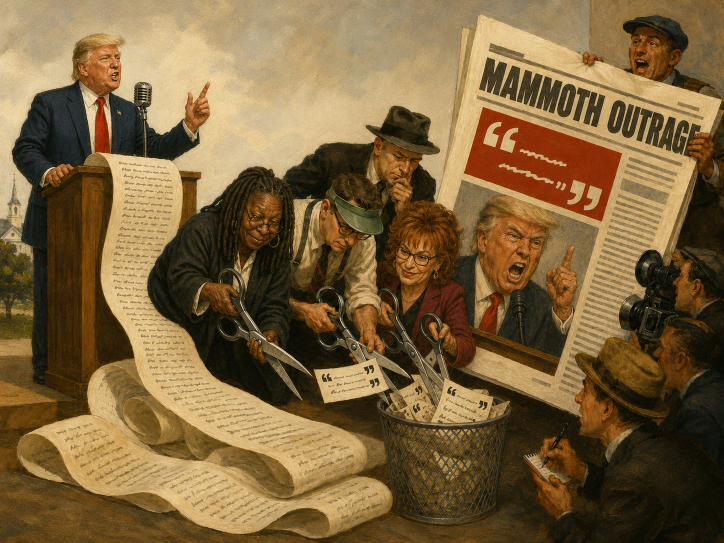
Readers of this article walked away thinking Vance got exposed and Trump's inflation comment was indefensible. What the full record shows is more complicated: Trump communicated poorly, Vance offered a paraphrase that tracks with Trump's own later clarification, the hosts challenged the wording without engaging the substance, and the 4.2% CPI number driving the whole segment was a war-driven energy spike interrupting a ten-year trend toward normal inflation — not evidence of a runaway economy. Inflation number, given the affordability crisis, deserves scrutiny, but the media needs the full context. Readers deserved the full quote, the New York Post clarification, the core-versus-headline CPI distinction, and the ten-year inflation trend. They got a TV recap scored by the home team.

Readers got an accurate account of Tuesday's announcement and a thorough presentation of why critics oppose it. What they did not get is the policy case for why it is happening, the 45-year history of mainstream Republican support for exactly this kind of restructuring, the outcomes data that drives that argument, or the GAO's finding that the OCR had already stopped functioning before anyone announced a transfer. A complete story gives readers the tools to decide. This one handed them a conclusion.
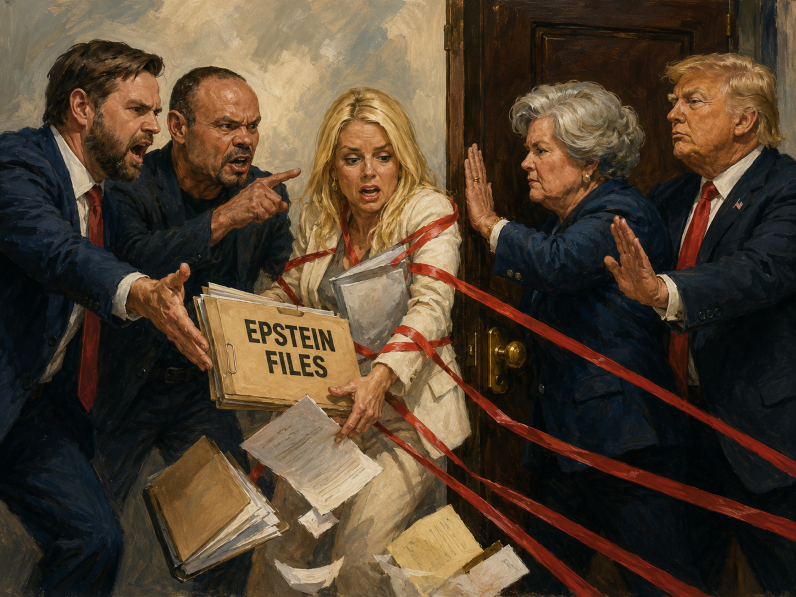
The NYT's Situation Room reporting is significant and the underlying accountability questions are real. What HuffPost, The Hill, and the Daily Beast did with that reporting is a different matter entirely. All three took a Democratic press statement, checked it against nothing, and published it as the conclusion of a report that said the opposite. The NYT did not call Vance the cover-up architect. Garcia did. HuffPost, The Hill, and the Daily Beast amplified Garcia's framing without the basic step of asking whether it matched the article Garcia was citing — an article that shows Vance arguing to release files that could damage the president, being overruled by Wiles, and losing that argument three times. The person who created the crisis was Bondi. The person who blocked disclosure was Wiles. The person who wanted the issue buried was Trump. The person who fought for transparency and lost was Vance. Readers who relied on HuffPost, The Hill, or the Daily Beast got a story the evidence does not support.
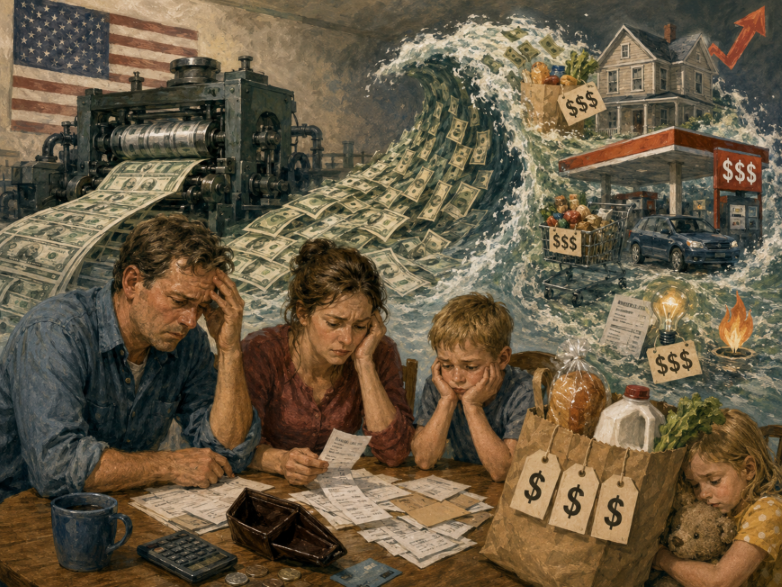
Since 2020, cumulative inflation has erased nearly 23% of the dollar's purchasing power — and that ground is not coming back. The mechanism was straightforward: six COVID-era relief laws pumped $4.6 trillion into the economy, the Federal Reserve expanded the money supply by 42% in 22 months, and the warnings from economists like Larry Summers were dismissed in real time as politically inconvenient. Both parties voted for the spending. Both administrations signed the bills. Neither has offered the public an honest account of the permanent cost. The Federal Reserve, far from being a neutral backstop, spent two decades cutting rates to successively lower floors after every crisis, institutionalizing a preference for cheap money and a formal 2% annual erosion of purchasing power that has been marketed as "stability." And the gold standard — for all its real limitations — kept average inflation near zero for over a century before it was abandoned, a track record the fiat era has never approached. Meanwhile, the current administration is imposing tariffs that economists broadly describe as inflationary while pressuring the Fed toward looser monetary policy — the combination most likely to revive the conditions of 2021. What Americans deserved across all of this was a political and media class willing to explain the cause clearly, acknowledge the loss honestly, and make the case for the fiscal discipline that is the only legitimate path forward. What they got was a rotating cast of scapegoats, a campaign promise that was either dishonest or economically illiterate, and a central bank that has never fully reckoned with its own role in the problem it is asked to solve.
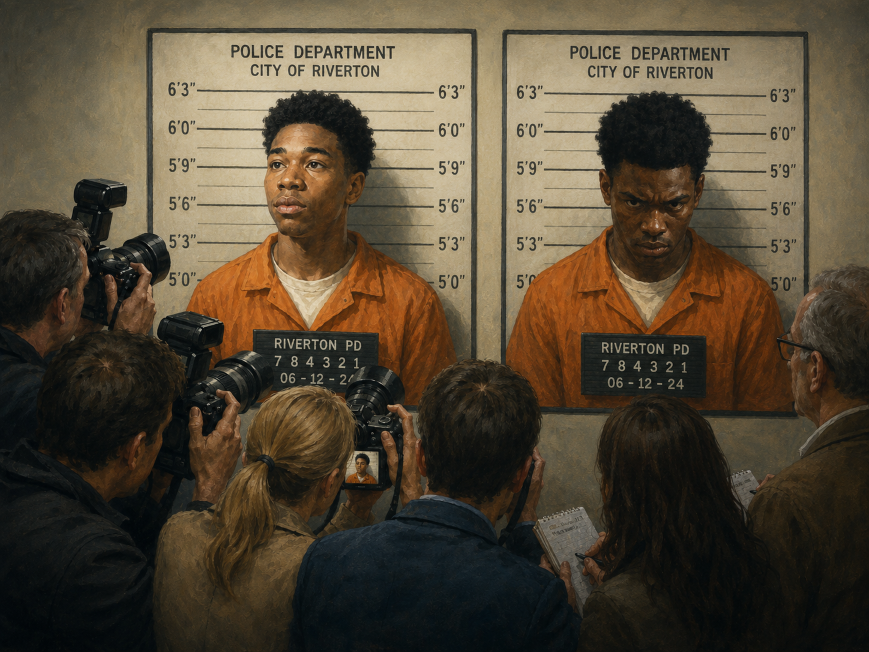
Austin Metcalf was a 17-year-old honor student and football MVP who died in his twin brother's arms after a stranger entered his team's tent, refused to leave, gripped a knife while daring people to touch him, and then stabbed him in the heart. Twenty-one witnesses described that sequence. A jury convicted in three hours and then rejected a second chance to show leniency. Readers of ABC's article got fragments of that story, arranged around the defendant's perspective, while the victim was reduced to a backdrop for the coverage. That is not balance. That is a framing choice, and it has a direction.

Voters deserved a clear-eyed account of what California's mail ballot system is: its genuine procedural safeguards, its documented and actively litigated structural failures, and the significant gap between those two things. The fraud allegations around this specific race were largely weak, and the debunking was largely accurate. But the press's habit of treating a successful debunking as the end of the story — rather than the beginning of harder questions — meant that a federal guilty plea for voter registration fraud in Los Angeles County, nearly 900,000 uncleaned inactive voter registrations, and an ID standard that accepts gym memberships all went unreported in the week California's election system was under national scrutiny. The system may not be rigged. It is not, by any responsible reading of the available evidence, secure. Those are not the same statement, and journalism that treats them as interchangeable has failed its readers regardless of which direction it leans. Until politician fix this terrible system, California will continue to receive "rigged election" theories. Or maybe it is on purpose?
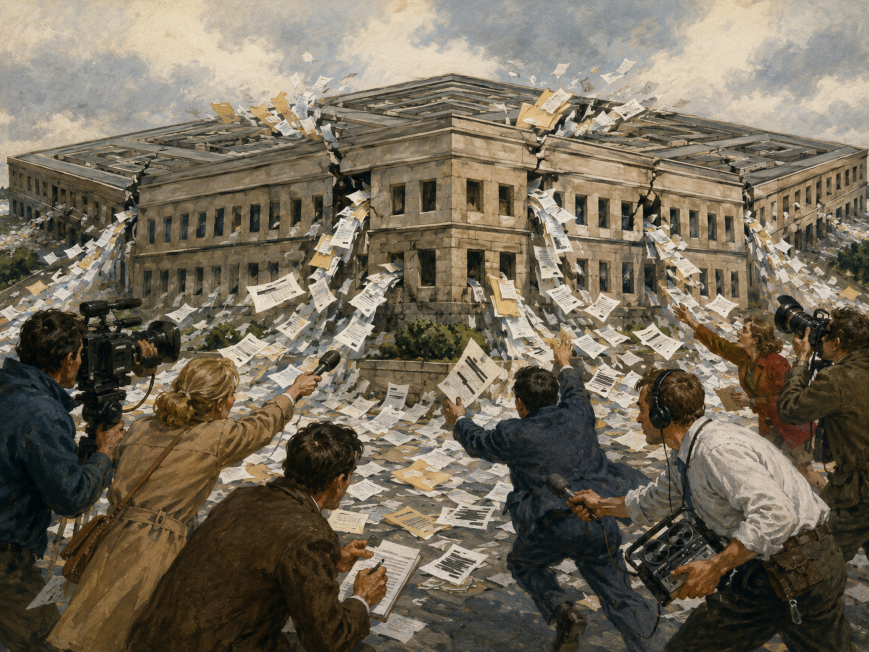
The June 1, 2026 Pentagon SCIF designation is not adequately described as either a press freedom assault or a routine security measure. It is the third successive mechanism deployed to achieve journalist access restrictions after federal courts blocked the first two — a pattern most outlets failed to assemble, and one that goes directly to whether the stated justification is genuine or pretextual. The missing context is specific: the court-defying escalation sequence, the unasked ICD 705 procedural question, and the bilateral leak record that partially validates the security concern while simultaneously exposing the selective application of it. Coverage that reported the announcement without these elements did not give readers what they need to evaluate the story. The Washington Post came closest. No outlet published the full picture.
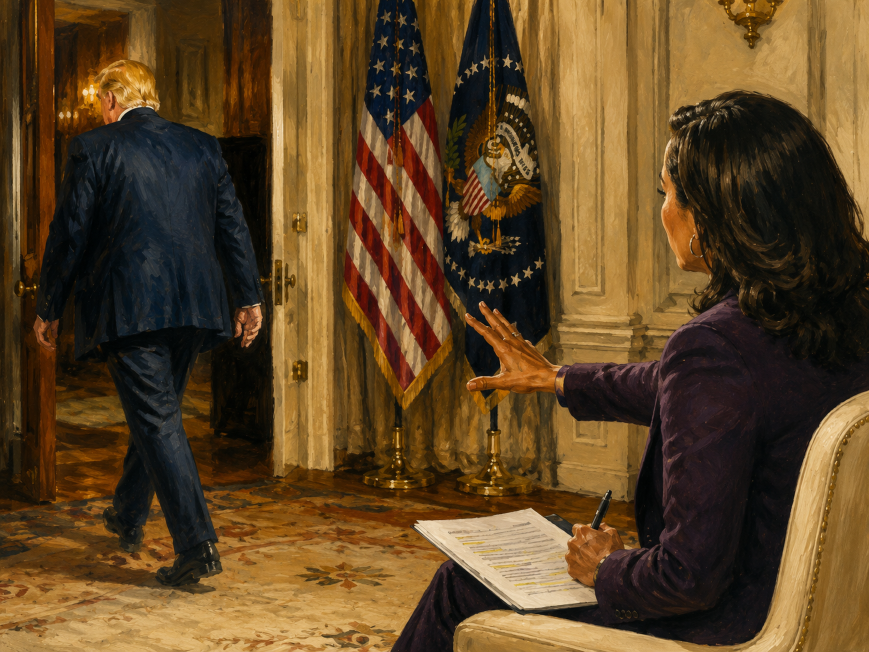
Viewers of this interview got real news: Iran still has a significant missile reserve, Mojtaba Khamenei is alive and part of the negotiating chain, and Trump has explicitly endorsed compensating January 6th defendants including those who clashed with police. What they didn't get was consistent scrutiny. The most consequential factual claims in the interview — about the scope of military destruction, the status of Iran's nuclear program, and the Venezuela operation — were treated as statements of record rather than claims requiring verification. Welker's adversarial posture was real and occasionally effective, but it was applied selectively in ways that a symmetric accountability standard would not produce. The interview is worth watching. It is not the rigorous reckoning its framing implies.
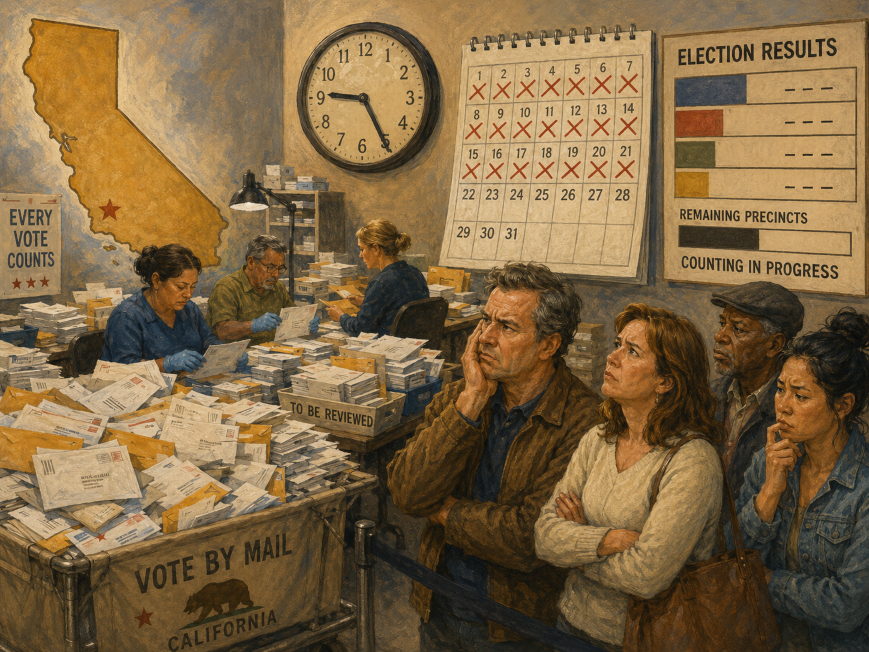
California's slow vote count is a policy output , not a natural law. The state has made a deliberate choice to prioritize late ballot access over timely results, and that choice carries real costs: prolonged uncertainty, underfunded processing infrastructure, and a structural environment that is difficult to audit in real time and tailor-made for disinformation. None of that means fraud is occurring. But it does mean the officials who designed this system owe the public a straight answer about the tradeoffs they are making — and the media outlets that spent this week debating Trump's social media posts instead of asking that question failed their readers.
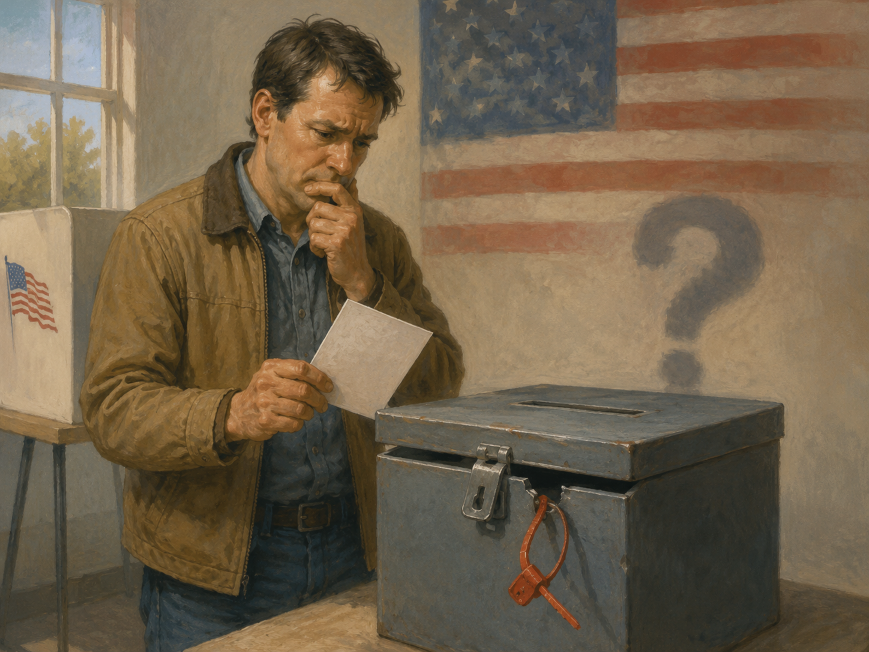
The 2020 election outcome was accurate. That is established, confirmed, and settled. The administration of the 2020 election had real, officially documented failures. Fulton County's chain-of-custody breaks, double-scanned ballots, audit data errors, and missing authentication files are on the record in state consent orders and federal search warrants. The Coffee County breach was real, was facilitated by local officials, and was concealed. Pennsylvania's mid-election rule changes created unresolved legal uncertainty. California's own Republican Party operated unauthorized drop boxes designed to look official. The DMV that runs California's automatic voter registration produced confirmed ineligible registrations that went undetected until voters used them. The fraud narrative was weaponized in bad faith. The fake electors scheme across seven states is documented. Arizona's Republican attorney general suppressed investigators' own findings. Fox News knowingly broadcast false claims about voting machines. And the vulnerabilities that 2020 exposed have not been fixed. The question is not whether 2020 was stolen. It wasn't. The question is whether, given everything that went wrong and everything that was documented, we are building an election system that could not be. The answer, in most states, is not yet.
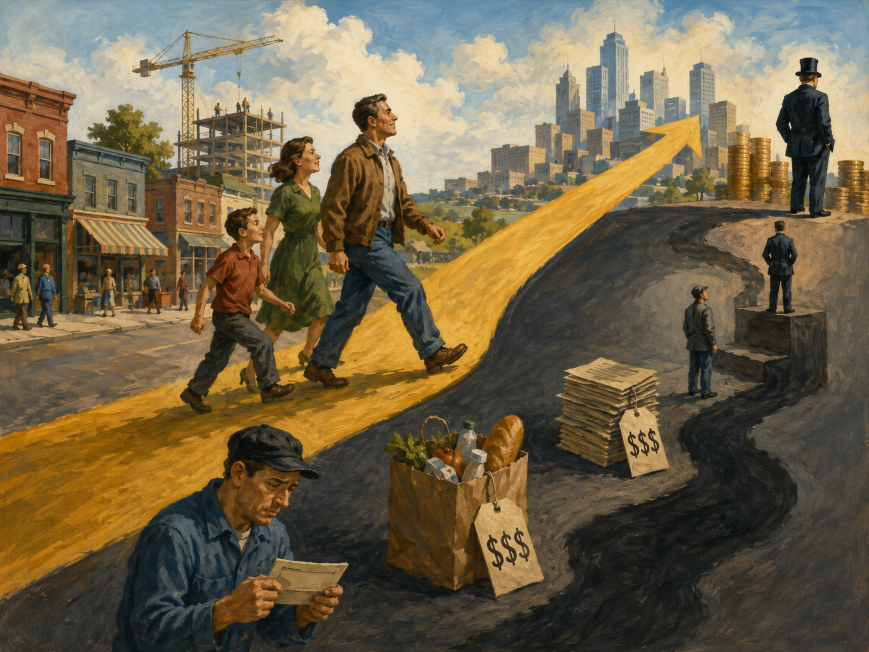
Readers across every major news outlet received the same story on Friday morning: 172,000 jobs, beats expectations, labor market resilient. What they did not receive: nearly 5 million workers have exited the labor force in the past year and are not counted in the unemployment rate; three-quarters of 2026 job growth came from healthcare and social assistance; hourly wages are growing at 1.7% against 3.8% inflation; and the oil price shock that is driving that inflation represents a 55% spike from pre-war levels, with 8 million barrels per day offline because a waterway carrying a fifth of global oil supply has been largely closed for three months. A jobs report that beats a low forecast while real wages fall, the labor force shrinks, and an oil shock accelerates inflation is not a straightforward good news story. Covering it as one is a disservice to the people the report is supposed to describe.
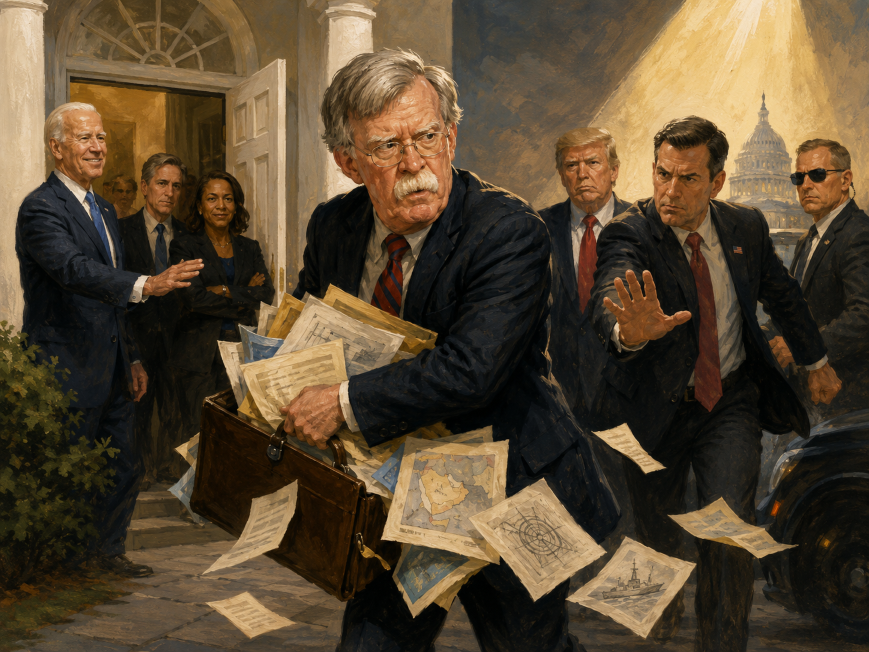
Bolton may well have broken the law. The conduct described in the indictment is documented and serious, and his history of information handling gives the prosecution legitimate factual footing. What readers deserved today was coverage that held both things at once: the underlying conduct is real, and the timing and institutional context of the prosecution deserve scrutiny. Instead, they got outlets sorting into two camps — guilty as charged, or political hit job — while the more complex and more honest story went unreported.
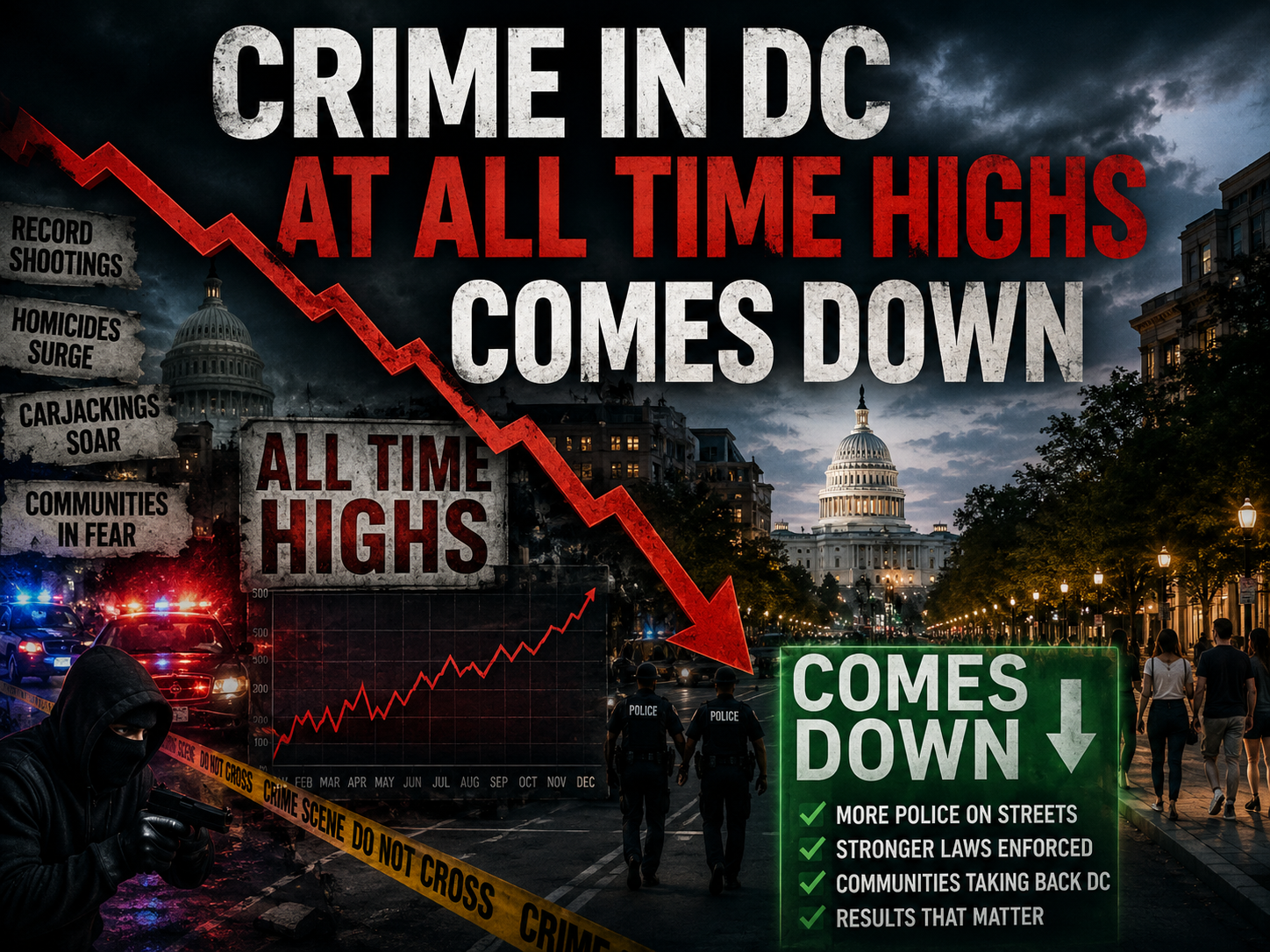
Readers of this article came away knowing that a think tank found the National Guard reduced property crime but not violent crime. What they deserved to know is that DC's violent crime had already fallen 35 percent in 2024 — before the Guard arrived — because congressional pressure in 2023 finally forced a broken prosecution system, a three-year-old unaccredited crime lab, and a depleted police force to start functioning again. The Guard debate is a political argument about credit. The actual story is about institutional failure, accountability deferred, and 274 people killed in a single year while officials waited for someone to make them do their jobs.
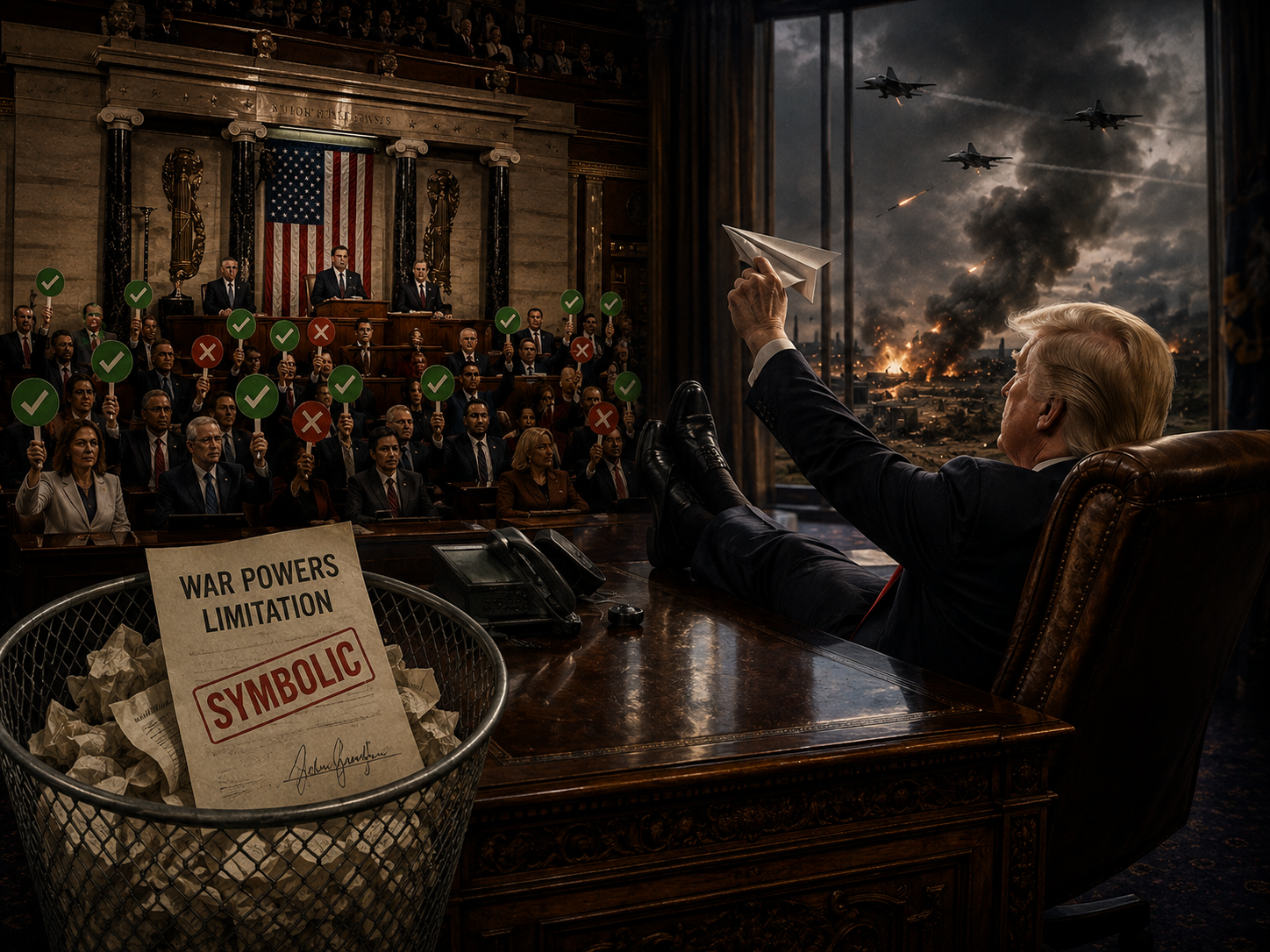
Readers deserved to know that the legal mechanism at the center of this story — a concurrent resolution bypassing the president's signature — has been considered constitutionally dead by legal scholars and every administration since 1983. They deserved to know that Senate passage requires 60 votes Democrats do not have, making this resolution's path to any effect essentially nonexistent. And they deserved to know that the "bipartisan rebuke" consisted of four votes, two of which (Massie and Davidson) were entirely predictable from members with long-established anti-interventionist records. The story reported what happened. It failed to report what it meant.

The NY Post covered Owens' press freedom speech while quietly reframing his resignation as a ratings story, inserting unsourced statistics to defend Weiss's changes, and omitting his most specific allegation — that CBS blocked its own team from covering an active American war. It described Weiss's mandate as "bringing balance" without examining her documented record of factual failures and selective editorial standards at The Free Press. And it presented 60 Minutes as an institution of unimpeachable integrity without acknowledging the $15 million bias lawsuit, the DeSantis segment manipulation, or the CECOT controversy that gave the reform argument its basis in the first place. This story has legitimate accountability concerns on both sides. The NY Post reported one of them.

Trump cursed at Netanyahu. That is confirmed and newsworthy. What ABC left out: the full quote — in which Trump told Netanyahu he would be in prison without American protection — which changes the call from frustration to coercion; the documented pattern of identical confrontations that makes this call part of a series; Israel's security rationale for the Lebanon escalation that Hezbollah provoked; and the fact that Iran's demand that the US-Iran ceasefire cover Lebanon was never agreed to by either the US or Israel. ABC reported the expletive. The story that needed telling was underneath it.
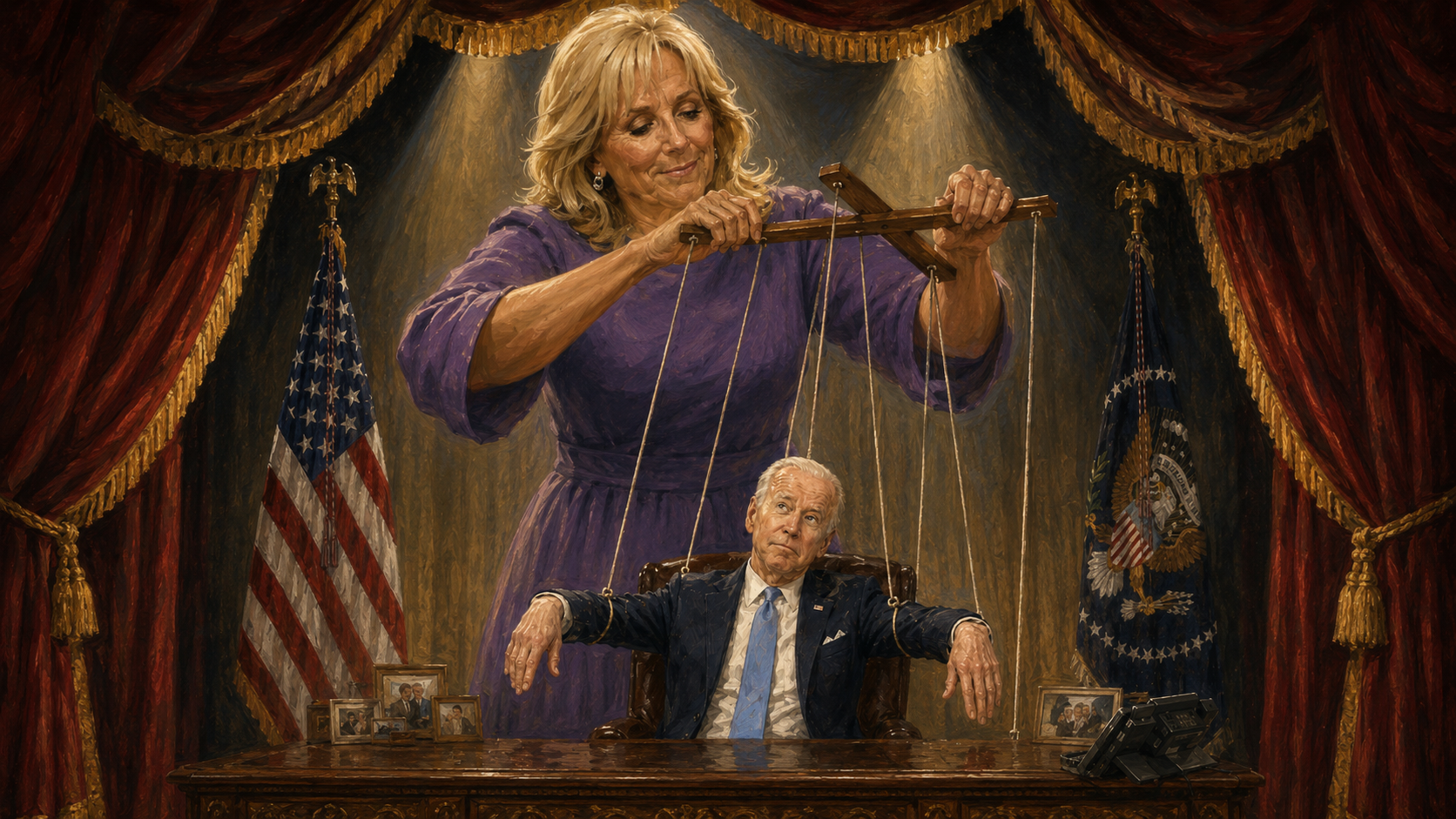
Jill Biden feared a stroke. Then she told the country he did a great job. CBS asked about the fear and not the praise. Her memoir says she flagged his health to doctors. CBS let her call it natural aging. Her husband's library has raised $4 million against a $200 million goal and his legacy is hemorrhaging donors. CBS promoted the book designed to address that without mentioning it. The publisher and CBS share a corporate parent. CBS did not disclose it. What CBS produced was a promotional piece. What the moment required was an interview. Those are two different things — and the gap between them is exactly what Rebuke Nation exists to name.

California doesn't have a commitment problem — it has an accountability problem. The state hosts over a quarter of the nation's homeless, two-thirds of them unsheltered, the majority mentally ill, and its own auditor can't evaluate whether 28 out of 30 programs work. "Advancing conversations" after years of this record isn't leadership — it's a talking point.
The article correctly identifies transvestigation as harmful and baseless online harassment. That part is true and worth saying. But it earns that correct conclusion dishonestly — by conflating a legitimate sports science debate with conspiracy theorizing, by presenting a contested ad interpretation as settled fact, by sourcing exclusively from ideologically aligned academics, and by using raw viral metrics as a proxy for cultural belief. Readers who accept this article at face value will come away misinformed about all three subjects it covers: the Khelif case, the Sweeney ad, and the actual scope of the transvestigation phenomenon. That is a failure of journalism, regardless of whether the underlying cause is sympathetic.
This article is advocacy journalism dressed as political reporting. By stripping out the Reid Hoffman funding, the deposition denial, and the six-month concealment timeline, The Hill transforms a complicated story about potential perjury and politically-financed litigation into a simple narrative of Trump retribution. The missing context doesn't vindicate the DOJ's investigation — but it's essential for any reader trying to form an independent judgment. Its absence is not an oversight. It's a choice.
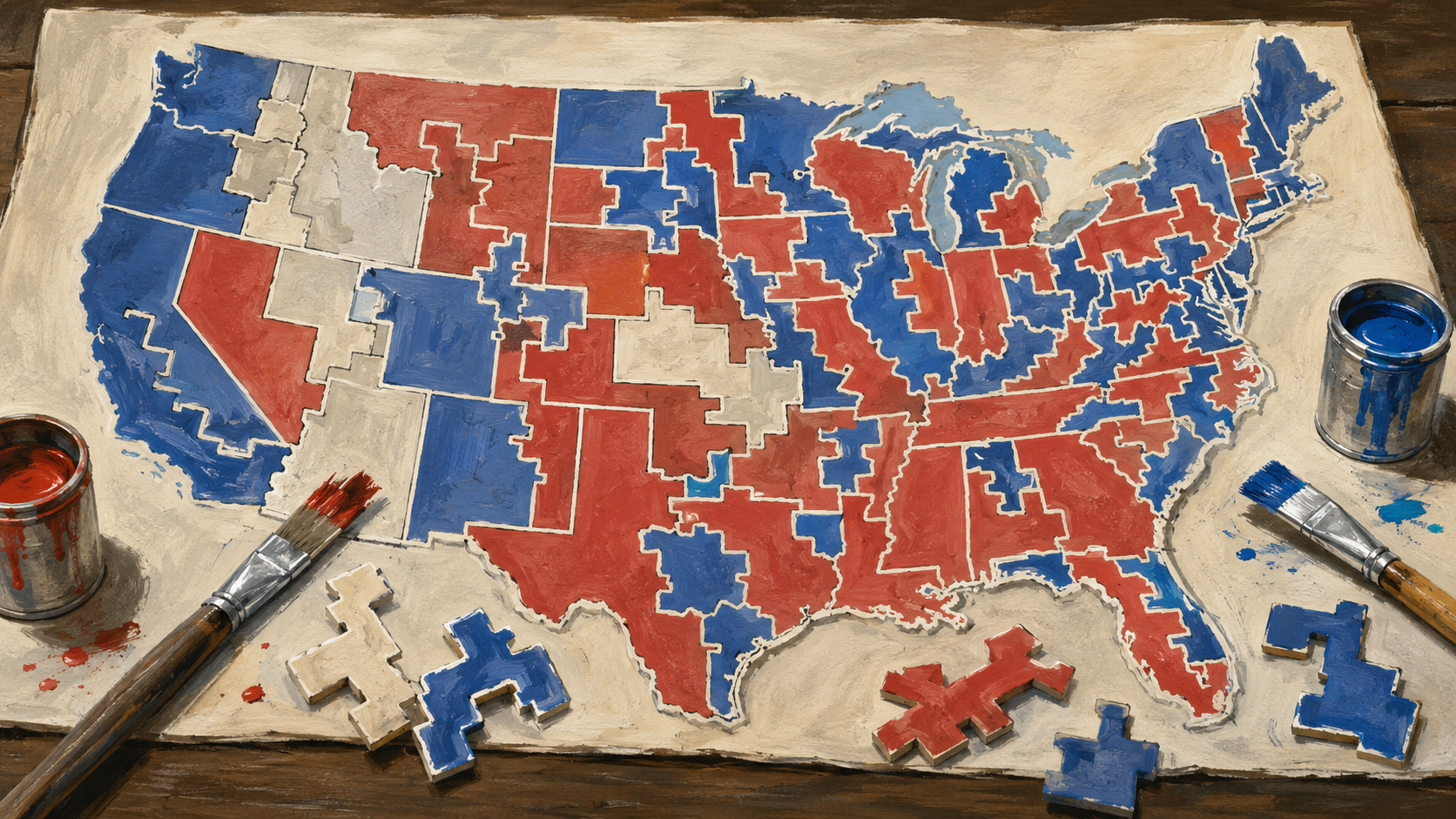
CNN's article accurately reports the facts of the current redistricting cycle but frames a decades-long bipartisan structural problem as a novel Republican power grab. The "+10 seats" headline obscures a pre-existing ~20 seat Republican structural advantage built long before this cycle began. Both parties are aggressively manipulating maps — and both parties have been doing so for decades, including in blue strongholds across the Northeast and Midwest. Readers deserve that full picture alongside the current cycle's scorecard.
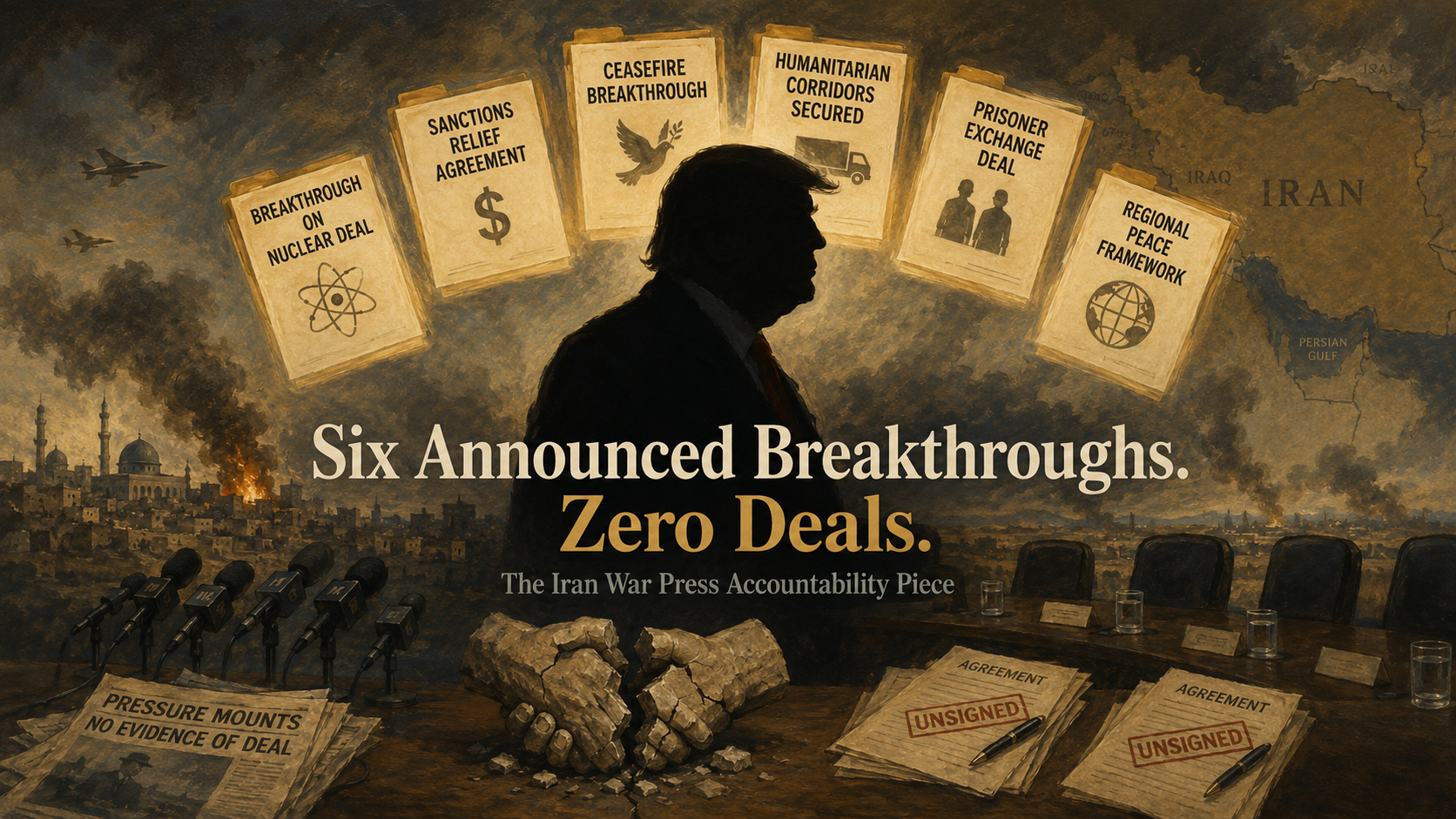
A 60-day MOU framework has been reached as of today — the most concrete diplomatic development in the Iran war since the April 8 ceasefire. It deserves serious coverage. What it also deserves, and is not getting, is the context that makes it meaningful: every previous announced breakthrough dissolved without consequence; the uranium demand Trump called non-negotiable 72 hours ago has been deferred to a 60-day window; the Accords condition he called mandatory last week is absent from every deal description today; the oversight body he named for uranium disposal does not exist; Iran's original 10-point framework already included continued Iranian control of the Strait; and the threat to resume bombing if talks fail is constrained by a munitions shortage the Pentagon has not addressed. None of those facts are secret. All of them are on the record from CNN, NPR, NBC, Al Jazeera, Bloomberg, the Council on Foreign Relations, and the House of Commons Library. The press is reporting a number — 60 days — as if the number itself means something has been resolved. Nothing has been resolved. The uranium question is deferred. The Hormuz control question is deferred. The sanctions question is deferred. The Abraham Accords condition has vanished without explanation. What the 60-day MOU actually does is give both sides a structured way to keep talking without committing to anything. That may be valuable. It is not a breakthrough. And the difference between those two things is exactly what readers deserved to know today — and were not told.
Scott Bessent wrote "Resilience" on a notepad. A photographer captured it. HuffPost built a mockery piece around social media reaction while the same Cabinet meeting contained a president threatening to bomb allies, a DHS secretary saying a US senator deserved to be pepper-sprayed, and the president confusing Iran and Venezuela. The notepad story is not wrong. It is a distraction from the stories that mattered — and choosing it over them is an editorial decision HuffPost made without acknowledging it.
Pequeño argues Republican voters chose Paxton because they fear Trump's authoritarian grip. What she left out: Texas conservatives had been building grassroots opposition to Cornyn since his 2022 gun bill — years before Trump's endorsement; Cornyn voted FOR the SAVE Act in March 2026, undercutting the "principled moderate" framing; Paxton won by 26 points in a democratic election in which voters cited specific policy grievances, not fear; and the language of tyranny and authoritarianism applied to a democratic primary inverts the meaning of both words. Republican voters chose a candidate whose positions on guns and immigration aligned with theirs. That is not what tyranny looks like. It is what a primary looks like.
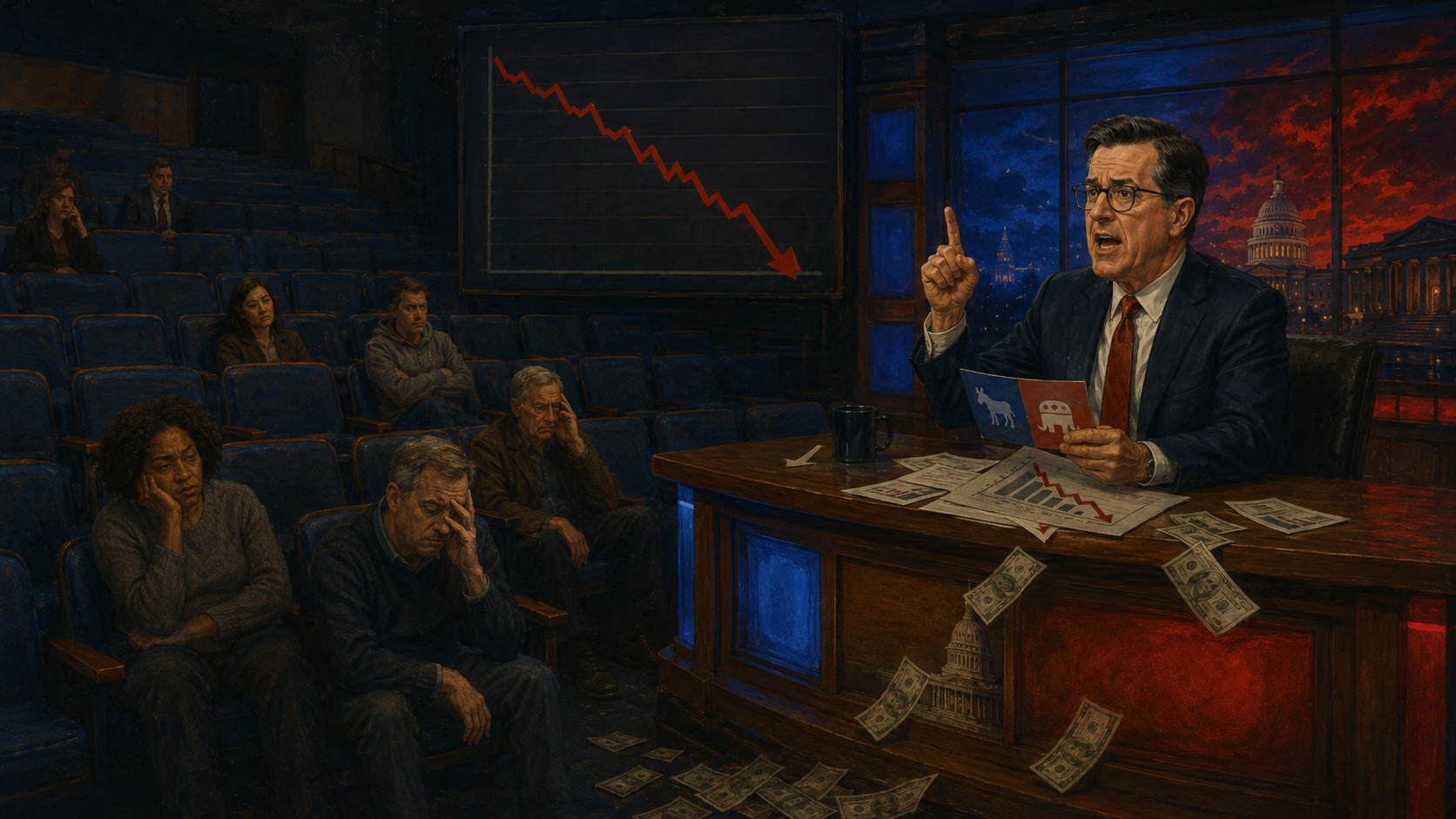
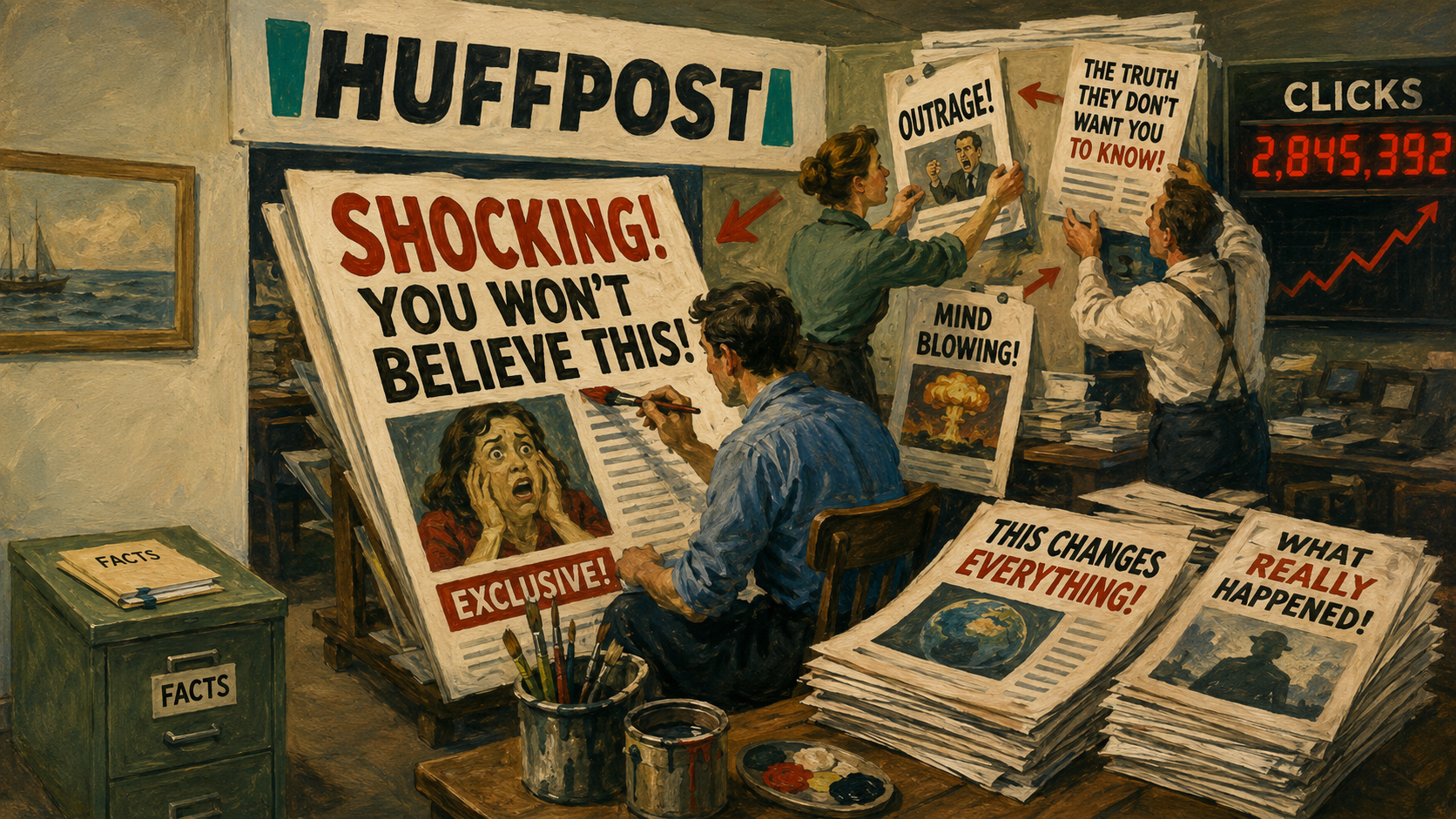
HuffPost reported a real event and called it petty in a headline attributed to no one. It dismissed a documented $40-50 million annual loss as a corporate talking point. It replaced an examination of CBS News's institutional grievance with an appeal to Colbert's fan base. It presented "most assume" as a credible counter to documented financial reporting. The morning show blackout may have been petty. It may also have been a rational response by a news division that publicly defended a colleague who then attacked them on air — made in the context of a show that had been commercially unsustainable for years regardless of who was in the White House. HuffPost gave readers one of those readings, put quotation marks around a word no one said, and called it a report.
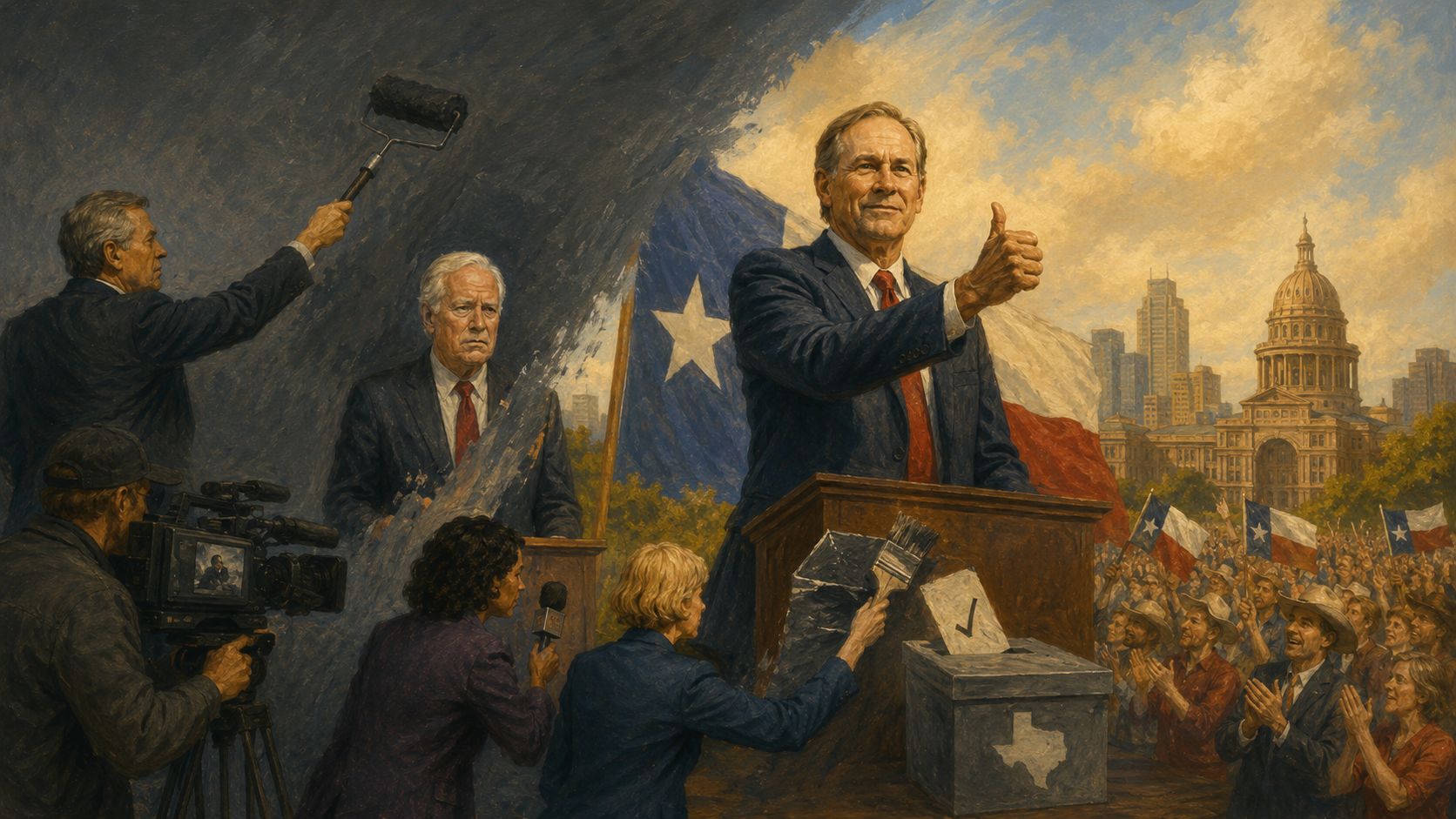
USA Today called Paxton's win a Republican loss. To sustain that verdict, the piece had to describe Cornyn as "a reliable conservative" while omitting the Uvalde gun bill that Texas conservatives found disqualifying; had to note Paxton's impeachment while burying his full acquittal in parentheses and omitting the DOJ's decision not to prosecute entirely; and had to imply Democratic electoral advantage while the most neutral polling shows a toss-up and Cook Political Report rates the seat lean Republican. Put those facts back in and the story changes: a conservative electorate rejected a bipartisan dealmaker who co-wrote a gun bill with Democrats, chose a candidate who was impeached by his own party and fully cleared, and produced a general election race that is competitive but still favors Republicans. That is a legitimate story. USA Today didn't tell it.

ABC News accurately reported the directive and the legal and humanitarian objections to it. What it did not report: the record 12-million-case USCIS backlog that gives the administration's resource argument real substance; the ways consular processing can actually be faster and less discretionary for some applicants; the visa overstay incentive structure the policy is designed to address; the full legal debate over executive discretion in adjustment of status; and any meaningful examination of the "extraordinary circumstances" standard that will determine the policy's real-world impact. The result is a piece that treats a contested immigration policy debate as a one-sided harm story. The harm is real and deserves coverage. So does the other side.
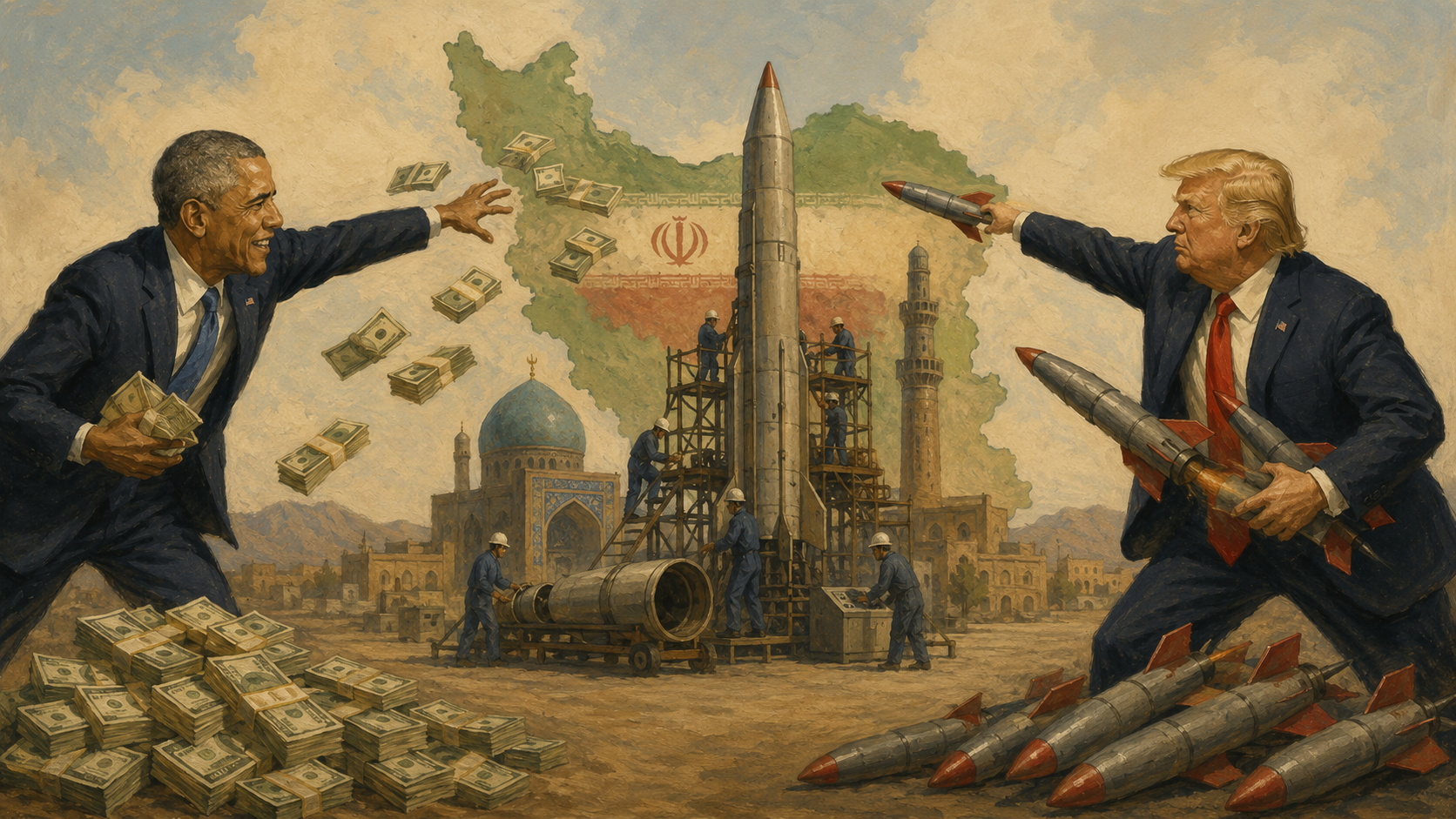
The facts in this piece are largely accurate. The framing is not neutral. "Poorly planned," "scant consultation," and the Obama comparison are all contested political positions presented as analytical backdrop. The Oman mediator's pre-war statement — that Iran had agreed to never stockpile enriched uranium the day before the bombs fell — is the single most important fact for evaluating whether this war was necessary. CNN has buried it every time it has appeared. And the piece's anchor sentence on the JCPOA — that it "cut off Tehran's multiple paths to nuclear weapons" — overstates what the deal actually did in a way Obama himself contradicted at the time of signing. A piece filed as Analysis should not rest its central comparison on a sentence its own subject publicly qualified.
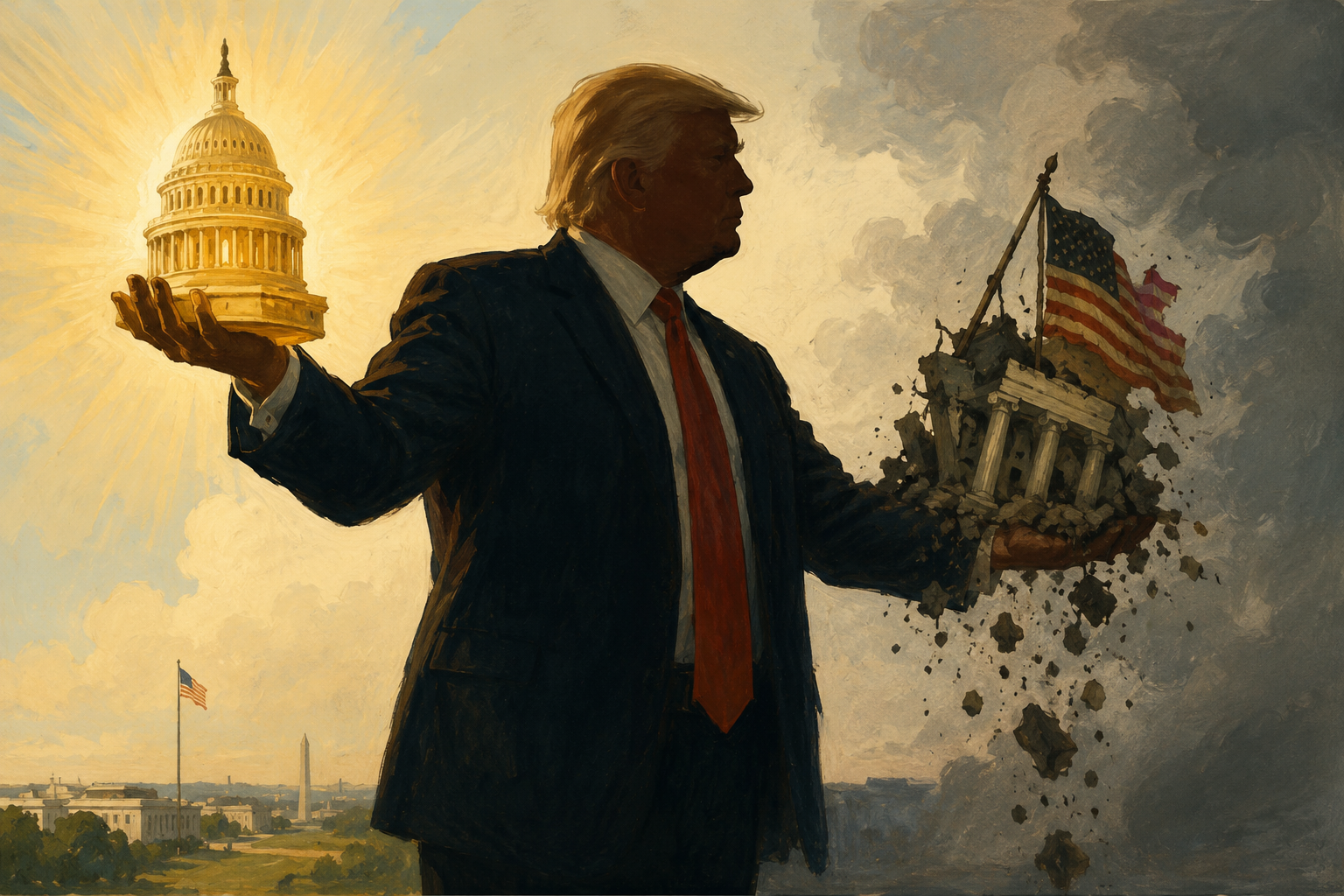
Axios got the facts right and the framing wrong. The individual events it describes are real and newsworthy. But bundling three unrelated stories into a single "the walls are closing in" narrative, treating a symbolic canceled House vote as structural presidential decline, and ignoring that Trump's primary endorsements delivered exactly what he wanted produces a conclusion the evidence does not support. The piece should have been labeled analysis or opinion. Filed as straight news reporting, it misleads readers not through fabrication but through the oldest trick in political journalism: letting the bottom line outrun the facts.
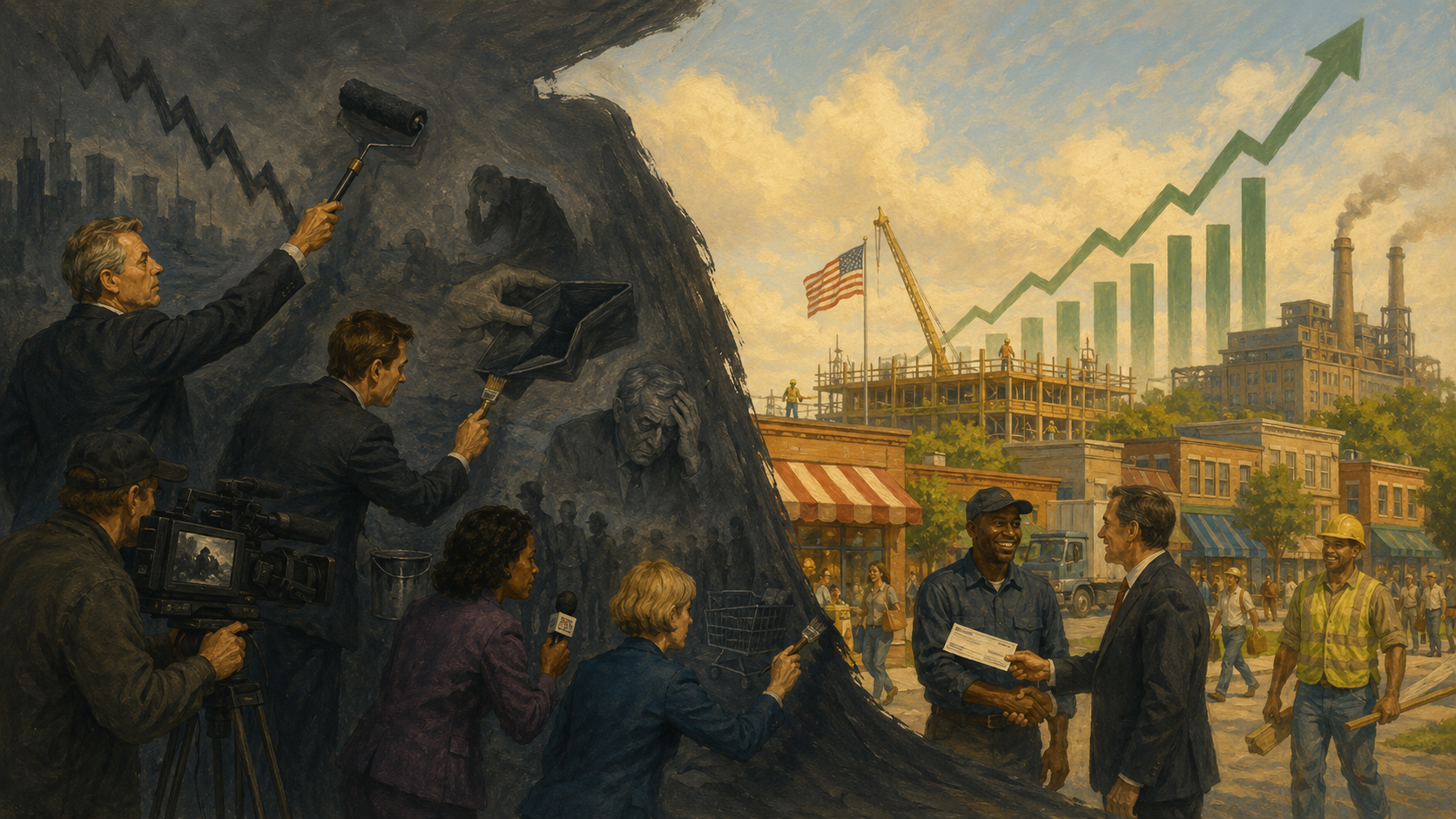
Consumer sentiment is at a record low. Americans are stressed about gas prices, inflation, and the economic fallout from the Iran war. All of that is true and important. What is also true — and almost entirely absent from coverage — is that the underlying economy is growing, actual inflation is far lower than the last time sentiment was this low, the index has a documented methodological controversy affecting historical comparisons, and a known partisan distortion effect inflates the magnitude of the reading. CNN and its peers reported the number accurately. They reported what it means incompletely. The result is coverage that confirms economic anxiety without giving readers the tools to assess how much of that anxiety tracks with economic reality — and how much of it is something else.