
The Redistricting Fight Is Bipartisan. CNN's Coverage Isn't.
By Don Keyhoetea · May 29, 2026 · 3 min read
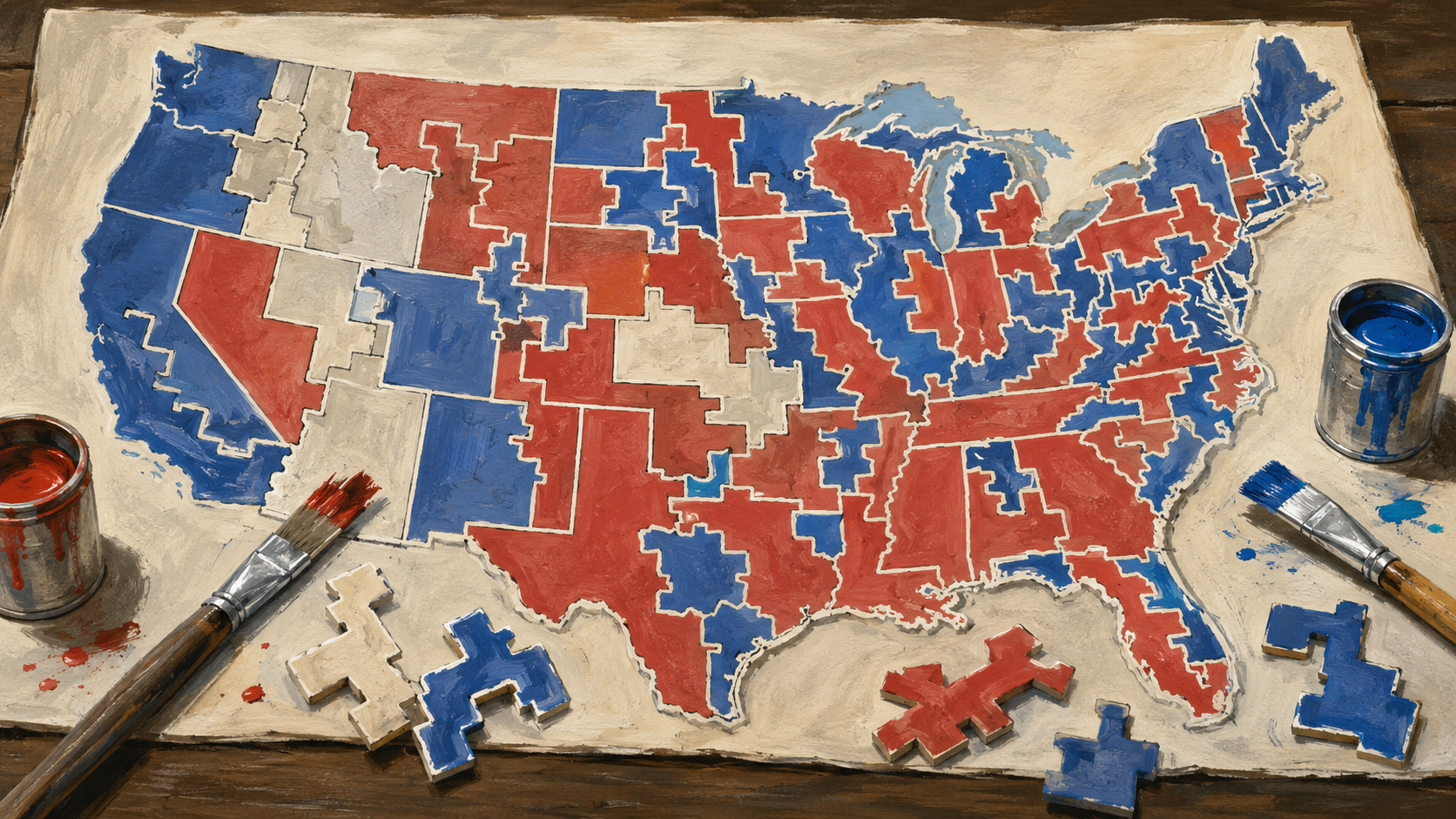
Republicans are poised to finish this year’s redistricting war 10 seats ahead of Democrats
The Quick Rebuke
CNN'S COVERAGE
Needs ContextCNN's article accurately reports the facts of the current redistricting cycle but frames a decades-long bipartisan structural problem as a novel Republican power grab. The "+10 seats" headline obscures a pre-existing ~20 seat Republican structural advantage built long before this cycle began. Both parties are aggressively manipulating maps — and both parties have been doing so for decades, including in blue strongholds across the Northeast and Midwest. Readers deserve that full picture alongside the current cycle's scorecard.
CNN's Main Claim
What They Got Right
What Needs Context
Our Analysis
This article is competent political reporting hampered by framing that serves a narrative. By measuring only mid-decade moves in isolation, it presents Republicans as aggressors in a fight they are winning from an already-favorable position. The structural advantage Republicans carry into every redistricting cycle — built over decades in statehouses — goes entirely unexamined.
Democrats are portrayed as reluctant responders, but Hakeem Jeffries explicitly named seven states where Democrats must act "aggressively," and California voters were actively persuaded to dismantle an independent commission. These are not the actions of a party being dragged into a fight — they are deliberate strategic choices that deserve the same level of scrutiny applied to Republican actions.
The article also treats the "+10 vs +6" framing as the definitive scorecard of this redistricting cycle. A more complete scorecard would show Republicans netting roughly 26 seats above proportional representation once baseline structural advantages are included. That is the actual magnitude of the problem — and it applies to both parties' long-term map manipulation, not just the current cycle.
The Bottom Line
CNN's article accurately reports the facts of the current redistricting cycle but frames a decades-long bipartisan structural problem as a novel Republican power grab. The "+10 seats" headline obscures a pre-existing ~20 seat Republican structural advantage built long before this cycle began. Both parties are aggressively manipulating maps — and both parties have been doing so for decades, including in blue strongholds across the Northeast and Midwest. Readers deserve that full picture alongside the current cycle's scorecard.
Sources
- 1. Texas Tribune historical account
- 2. MultiState detailed analysis of 2003 vs. current cycle:
- 3. Rucho v. Common Cause (2019) The actual Supreme Court opinion
- 4. SCOTUSblog full case file
- 5. Justin Levitt / All About Redistricting The site itself, cited directly in the CNN article
- 6. Princeton Gerrymandering Project Their methodology and about page
About the Author
Don Keyhoetea
Don Keyhoetea writes for Rebuke Nation, an independent publication focused on media analysis, political framing, and source-based accountability.
Never miss a critique.
Subscribe to our RSS feed and get every new fact-check and media analysis delivered directly to your reader — no algorithm, no noise.