
Trump Told Netanyahu He'd Be in Prison Without Him. ABC Left That Out.
By Don Keyhoetea · June 2, 2026 · 7 min read
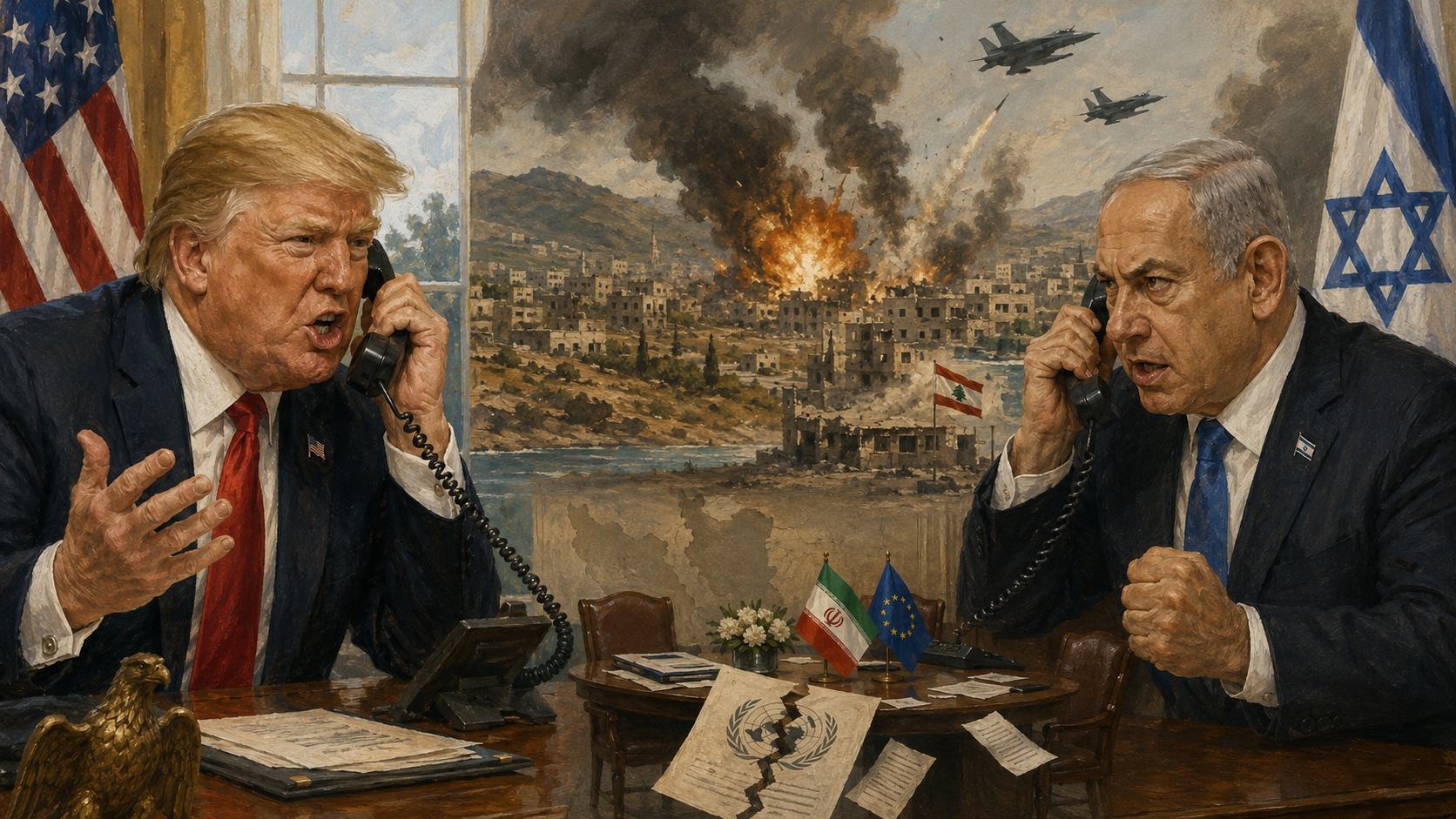
Trump cursed at Netanyahu in call over Lebanon escalation, sources say
The Quick Rebuke
ABC'S COVERAGE
Needs ContextTrump cursed at Netanyahu. That is confirmed and newsworthy. What ABC left out: the full quote — in which Trump told Netanyahu he would be in prison without American protection — which changes the call from frustration to coercion; the documented pattern of identical confrontations that makes this call part of a series; Israel's security rationale for the Lebanon escalation that Hezbollah provoked; and the fact that Iran's demand that the US-Iran ceasefire cover Lebanon was never agreed to by either the US or Israel. ABC reported the expletive. The story that needed telling was underneath it.
ABC's Main Claim
What They Got Right
The core facts are accurate and properly sourced to multiple officials. Trump told senior administration officials he wanted to speak with Netanyahu, furious that the Lebanon escalation could derail progress on the Iran peace plan — which Trump had just edited and sent to Iran for consideration. The sequence — Trump edits peace plan, sends it to Iran, Israel escalates in Lebanon, Iran suspends talks, Trump calls Netanyahu — is accurately reported and newsworthy.
After the call, Trump posted that talks with Iran were continuing "at a rapid pace" — while simultaneously posting that he had asked Netanyahu "not to go into a major raid of Beirut" and thanking him for turning troops around. The contradiction between those two public posts — one suggesting diplomatic momentum, one revealing a near-Beirut ground invasion was averted — is captured in the piece.
What Needs Context
ABC published the sanitized version of Trump's quote. The full quote is significantly more newsworthy.
ABC reported Trump asked Netanyahu "What the f--- are you doing?" Axios and the Times of Israel reported the fuller exchange — Trump told Netanyahu: "You're f***ing crazy. You'd be in prison if it weren't for me. I'm saving your ass. Everybody hates you now. Everybody hates Israel because of this." If that quote is accurate that changes the tone of the conversation. The quote is solid enough to use — it is Axios-sourced, three officials, corroborated on the key elements by independent sources.
That is a fundamentally different statement. "What are you doing" is an expression of frustration. "You'd be in prison if it weren't for me" is a claim of personal debt and a power assertion — a US president telling an allied head of government that he exists politically because of American protection. "Everybody hates Israel because of this" is a direct assessment of Israel's international standing from its closest ally. ABC reported one expletive. Axios reported the full context. The difference matters for understanding what the call actually was — not a frustrated question but a sustained dressing-down in which Trump invoked personal loyalty and international isolation as leverage.
This is not the first time. It is part of a documented pattern ABC does not mention.
Trump previously pressured Netanyahu into a ceasefire with Hamas in Gaza and compelled Netanyahu to call Qatar and apologize after a failed Israeli strike targeting Hamas leaders in Doha. Trump officials have repeatedly counseled Netanyahu against inflaming Lebanon, arguing the Lebanese Armed Forces have largely eliminated Hezbollah's infrastructure between the Litani River and the Israeli border in keeping with Resolution 1701. The Monday call is the latest in a series of escalating confrontations between Trump and Netanyahu over Israel's military conduct — not an isolated incident. ABC's piece describes it as notable but does not place it in this pattern.
Missing Facts
Why Netanyahu escalated in Lebanon — the context ABC omitted entirely.
ABC's piece frames Israel's Lebanon escalation as reckless behavior that endangered the Iran peace talks. It does not explain why Israel escalated. Hezbollah had been firing repeatedly at Israeli cities and citizens, and US officials acknowledged Israel had a right to respond — while also believing the IDF responded disproportionately in recent days. Israel's position is that post-October 7, it views control over territory and key buffer zones as its only guarantee of protection — rejecting Trump's argument that broader Middle East peace is what will secure Israel long-term. That is a documented strategic disagreement between the US and Israel that predates this phone call by months. ABC's framing — Trump angry, Netanyahu reckless — omits the Israeli security rationale entirely, presenting Israel's conduct as inexplicable rather than as the product of a specific, documented strategic doctrine.
Iran's own role in the collapse of talks is underweighted.
ABC reports that Iran suspended talks over Israel's conduct in Lebanon, quoting Iranian Foreign Minister Araghchi saying "a ceasefire between Iran and the U.S. is unequivocally a ceasefire on all fronts, including in Lebanon." What ABC does not report is that Iran's position — that the US-Iran ceasefire covers Lebanon — was never agreed to by the United States or Israel. From the April 8 ceasefire onward, Israel explicitly stated the pause applied only to direct US-Iran hostilities and did not extend to Lebanon, where Israeli operations against Hezbollah would continue. Iran is now using Israel's Lebanon operations as justification for suspending talks on a ceasefire that was never agreed to cover Lebanon in the first place. That is a significant Iranian negotiating maneuver — not simply a legitimate grievance — and ABC presents it as the latter without the former.
The "you'd be in prison" statement has direct relevance to Netanyahu's domestic situation — unreported.
Trump's reported statement that Netanyahu "would be in prison" without American protection is a direct reference to Netanyahu's ongoing corruption trial in Israel — a trial that has been proceeding in parallel with the war and that Netanyahu's critics say the war has been used to delay. Trump invoking that trial as leverage in a diplomatic phone call is a significant escalation of the personal dimensions of the US-Israel relationship. ABC reported neither the fuller quote nor its domestic Israeli context.
Our Analysis
ABC's piece is competent breaking news journalism. The sourcing is solid, the basic facts are accurate, and the story is newsworthy. The problem is one of depth and context — a piece that could have explained a structural rupture in the US-Israel relationship instead reported a dramatic phone call as episodic diplomatic color.
The fuller Axios quote — "you'd be in prison if it weren't for me" — changes the piece's meaning from "Trump frustrated with ally" to "Trump asserting personal power over an ally's head of government during active wartime negotiations." Those are different stories with different implications for US foreign policy, the Iran peace process, and the durability of the US-Israel relationship. ABC had access to that quote — Axios published it before ABC filed — and chose the sanitized version.
The missing Israeli context compounds the problem. A piece that reports Trump's anger at Netanyahu without explaining why Netanyahu escalated — Hezbollah attacks on Israeli cities, a documented Israeli security doctrine that the US has been unsuccessfully pressuring Israel to abandon for months — presents one side of a strategic disagreement as the obvious right side. That is a framing choice with consequences for how readers understand a conflict that has now drawn in the US, Iran, Israel, Hezbollah, Lebanon, and seven other countries simultaneously.
The Bottom Line
Trump cursed at Netanyahu. That is confirmed and newsworthy. What ABC left out: the full quote — in which Trump told Netanyahu he would be in prison without American protection — which changes the call from frustration to coercion; the documented pattern of identical confrontations that makes this call part of a series; Israel's security rationale for the Lebanon escalation that Hezbollah provoked; and the fact that Iran's demand that the US-Iran ceasefire cover Lebanon was never agreed to by either the US or Israel. ABC reported the expletive. The story that needed telling was underneath it.
Sources
- 1. Trump to Netanyahu in call on Israel striking Lebanon: "You're f***ing crazy"
- 2. Trump lashed out at Netanyahu over Lebanon: 'You'd be in prison if not for me'
- 3. Furious Trump tore into Netanyahu in expletive-filled phone call
- 4. Trump says Netanyahu should be pardoned for corruption
- 5. Trump calls for Netanyahu's corruption trial to be scrapped
- 6. With a ceasefire in Lebanon, Trump forces Netanyahu's hand again
- 7. Israel backs ceasefire but says Lebanon not included
About the Author
Don Keyhoetea
Don Keyhoetea writes for Rebuke Nation, an independent publication focused on media analysis, political framing, and source-based accountability.
Never miss a critique.
Subscribe to our RSS feed and get every new fact-check and media analysis delivered directly to your reader — no algorithm, no noise.