
The Sentence CNN Used to Judge the Iran War Doesn't Hold Up
By Don Keyhoetea · May 25, 2026 · 6 min read
Why Trump’s possible Iran deal may be almost as divisive as his decision to wage war
The Quick Rebuke
CNN'S COVERAGE
MisleadingThe facts in this piece are largely accurate. The framing is not neutral. "Poorly planned," "scant consultation," and the Obama comparison are all contested political positions presented as analytical backdrop. The Oman mediator's pre-war statement — that Iran had agreed to never stockpile enriched uranium the day before the bombs fell — is the single most important fact for evaluating whether this war was necessary. CNN has buried it every time it has appeared. And the piece's anchor sentence on the JCPOA — that it "cut off Tehran's multiple paths to nuclear weapons" — overstates what the deal actually did in a way Obama himself contradicted at the time of signing. A piece filed as Analysis should not rest its central comparison on a sentence its own subject publicly qualified.
CNN's Main Claim
CNN's Stephen Collinson argues that "the best hope for ending a poorly planned war, which started with scant consultation with Congress or the American people, may be an unsatisfactory peace that leaves critical issues to be resolved later." Trump's repeated deal predictions have been "wishful thinking or a misreading of Iran's true intentions," and the emerging agreement faces bipartisan opposition from hawks who say it caves on Iran's nuclear program and Democrats who say the war itself was a blunder.
What They Got Right
Trump's pattern of overstating deal progress is documented and accurately reported. Trump has repeatedly said a deal is imminent and very close. Each time, his predictions turned out to be wishful thinking or a misreading of Iran's true intentions. The administration rebuttal is included — Rubio called the suggestion that Trump would accept a deal strengthening Iran's nuclear position "absurd." The bipartisan political landscape is accurately described and fairly sourced on both sides.
What Needs Context
"Poorly planned" is an assertion, not a reported fact.
Evidence for poor planning exists — Trump admitted Iran's regional retaliation caught planners off guard. But the strikes killed Supreme Leader Khamenei, eliminated Iran's top military commanders, and degraded Iran's military capabilities, nuclear and ballistic missile programs across 40 days of sustained combat. Those outcomes required extensive operational preparation. "Poorly planned" may be the right strategic verdict. It is not self-evidently true, and it is not attributed to anyone. It is the author's conclusion stated as the article's opening premise.
"Scant consultation" adopts one side of a live legal dispute.
Members of Congress wanted to know why the US and Israel attacked Iran without notifying them first. That frustration is real and documented. But Trump sent an official notification to Congress on March 2 citing his constitutional authority as Commander in Chief, stating he was keeping Congress "fully informed, consistent with the War Powers Resolution." Whether post-facto notification satisfies the law is actively contested. CNN presents the Democratic position as settled background.
Missing Facts
The most important pre-war fact in the entire story was omitted.
The day before the war started, Oman's Foreign Minister — the chief mediator between Washington and Tehran — publicly announced that Iran had agreed during indirect talks never to stockpile enriched uranium, calling it a major breakthrough and saying a deal was within reach. He traveled to Washington specifically to appear on CBS and plead for more time, saying Iran had made significant concessions. The next day, the US launched Operation Epic Fury.
This is the most consequential fact about why the war started — and it directly determines whether the war was necessary at all. It appeared once in CNN's April coverage, buried in subordinate clauses. It does not appear in this piece.
The economic upside of a deal is ignored.
The piece frames a potential deal as "almost as divisive as the war," citing political opposition from multiple directions. It does not mention that reopening the Strait of Hormuz would directly relieve the gas prices driving consumer sentiment to a 74-year low. Framing the piece entirely around political opposition, while ignoring the broad public demand for economic relief a deal would provide, makes the outlook appear more negative than the facts support.
The Obama Comparison — Built on a Misleading Sentence
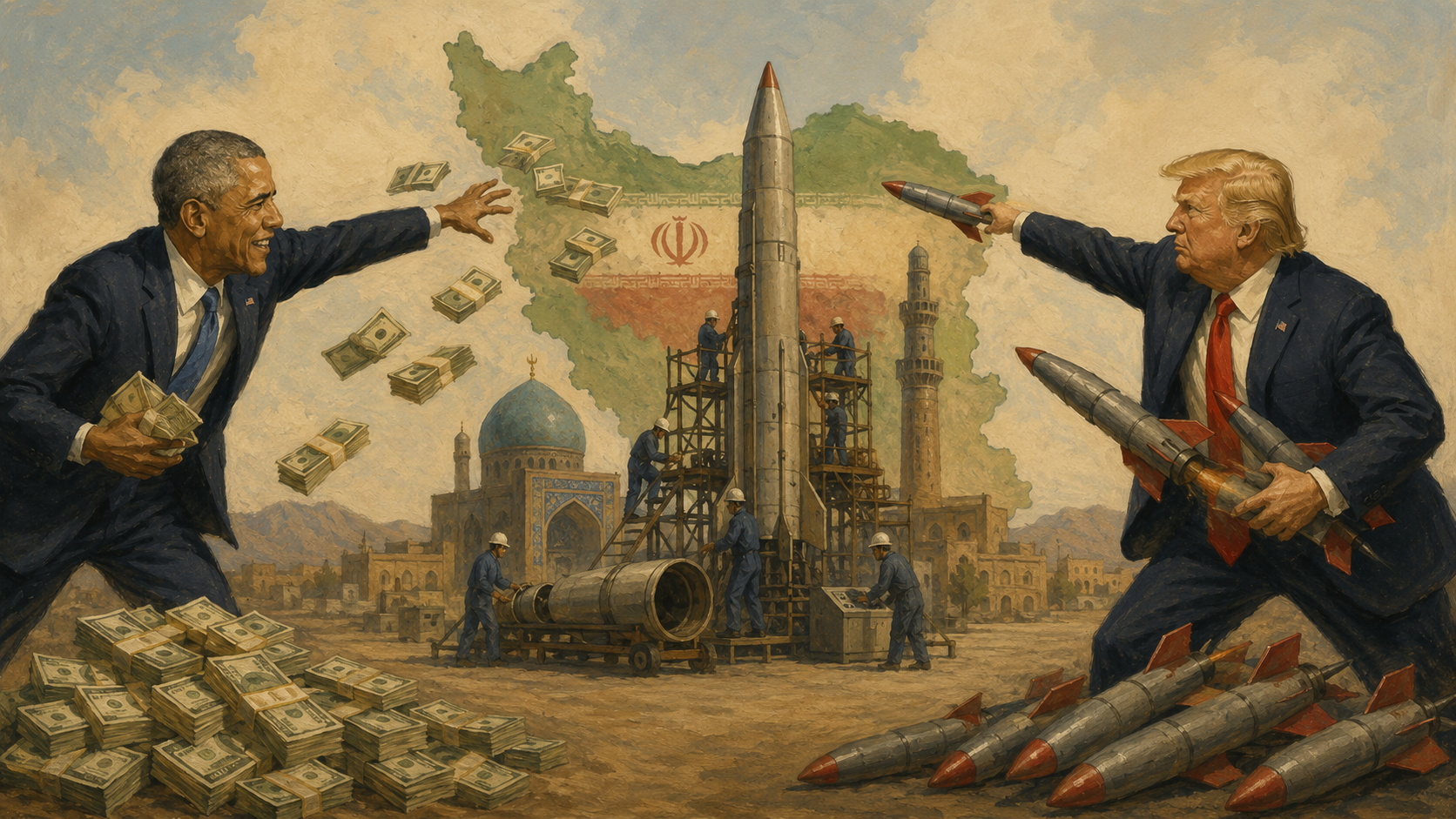
Collinson frames his central question this way: "Will his eventual agreement be more watertight than former President Barack Obama's pact, which was negotiated with Iran and major world powers in 2015? That deal cut off Tehran's multiple paths to nuclear weapons and included strict and constant verification."
That sentence is the framing anchor for CNN's entire Iran war analysis. It is also misleading — not fabricated, but selectively constructed to present the JCPOA in its most favorable light while omitting its most significant structural failures.
"Cut off Tehran's multiple paths to nuclear weapons" implies the deal closed those paths permanently. It did not. Starting in January 2026 — right now — the JCPOA would have allowed Iran to operate advanced centrifuges freely. By January 2031, all enriched uranium stockpile limits would have expired. Iran itself stated it would expand its nuclear program to an industrial scale once those restrictions lifted — potentially reducing its breakout time to weeks or days. Obama himself acknowledged in 2015, shortly after signing, that breakout time would go "almost down to zero" once the sunset clauses expired. "Cut off" implies permanence. The deal's own architect admitted it didn't provide that.
"Strict and constant verification" is also incomplete. The JCPOA placed no restrictions whatsoever on Iran's ballistic missile program — not even on intercontinental ballistic missiles capable of carrying nuclear warheads. Verifying a nuclear deal while leaving the delivery system entirely unaddressed is not "cutting off multiple paths." It is closing one door while leaving another open.
None of this means the JCPOA was worthless — it constrained Iran's program for a defined period and its collapse accelerated the current crisis. The question of whether it was the right deal is a legitimate debate that serious analysts on both sides have engaged for a decade. Collinson's sentence shuts that debate down by presenting one side of it as established fact. Readers who trust CNN's "Analysis" label to mean reported fact received an argued conclusion instead.
Our Analysis
CNN's May 25 Iran analysis by Stephen Collinson is misleading — not because its facts are wrong, but because of how they are assembled. The opening sentence plants three contested political verdicts — "poorly planned," "scant consultation," "the conflict he chose" — as established fact with no attribution, in a piece labeled Analysis rather than Opinion. The piece's central framing anchor makes it worse: Collinson describes the Obama deal as one that "cut off Tehran's multiple paths to nuclear weapons and included strict and constant verification" — the most favorable possible description of the JCPOA, stated as neutral history. The enrichment restrictions expired in 2031, advanced centrifuge limits were already lifting in January 2026, and the ballistic missile program was never addressed. Obama himself acknowledged at signing that Iran's breakout time would go "almost down to zero" once sunsets expired. Every Trump-Obama comparison in the piece is built on that incomplete sentence. Most damaging is what the piece leaves out entirely: the day before the bombs fell, Oman's chief mediator publicly announced Iran had agreed to never stockpile enriched uranium and that a deal was within reach. A piece asking whether this war was necessary cannot answer that question honestly while omitting the fact most directly relevant to it.
The Bottom Line
The facts in this piece are largely accurate. The framing is not neutral. "Poorly planned," "scant consultation," and the Obama comparison are all contested political positions presented as analytical backdrop. The Oman mediator's pre-war statement — that Iran had agreed to never stockpile enriched uranium the day before the bombs fell — is the single most important fact for evaluating whether this war was necessary. CNN has buried it every time it has appeared. And the piece's anchor sentence on the JCPOA — that it "cut off Tehran's multiple paths to nuclear weapons" — overstates what the deal actually did in a way Obama himself contradicted at the time of signing. A piece filed as Analysis should not rest its central comparison on a sentence its own subject publicly qualified.
Sources
- 1. Full Transcript: Omani Foreign Minister Badr Albusaidi tells "Face the Nation" a U.S.-Iran deal is "within our reach" — CBS News, February 27, 2026
- 2. 'This war is not of their making,' Omani foreign minister says of Iran — Middle East Eye, March 24, 2026
- 3. Iran Nuclear Deal 'Sunset' Gets Scrutiny — Arms Control Association
- 4. What Is the Iran Nuclear Deal? — Council on Foreign Relations
- 5. Letter to Senate Majority Leader Thune requesting public hearings — Sen. Duckworth et al., March 11, 2026
- 6. Iran in the Box: The Coercive Architecture of the 2026 Iran War — Small Wars Journal, March 30, 2026
About the Author
Don Keyhoetea
Don Keyhoetea writes for Rebuke Nation, an independent publication focused on media analysis, political framing, and source-based accountability.
Never miss a critique.
Subscribe to our RSS feed and get every new fact-check and media analysis delivered directly to your reader — no algorithm, no noise.