
The Guard Didn't Fix DC Crime. Congress Did.
By Don Keyhoetea · June 4, 2026 · 7 min read
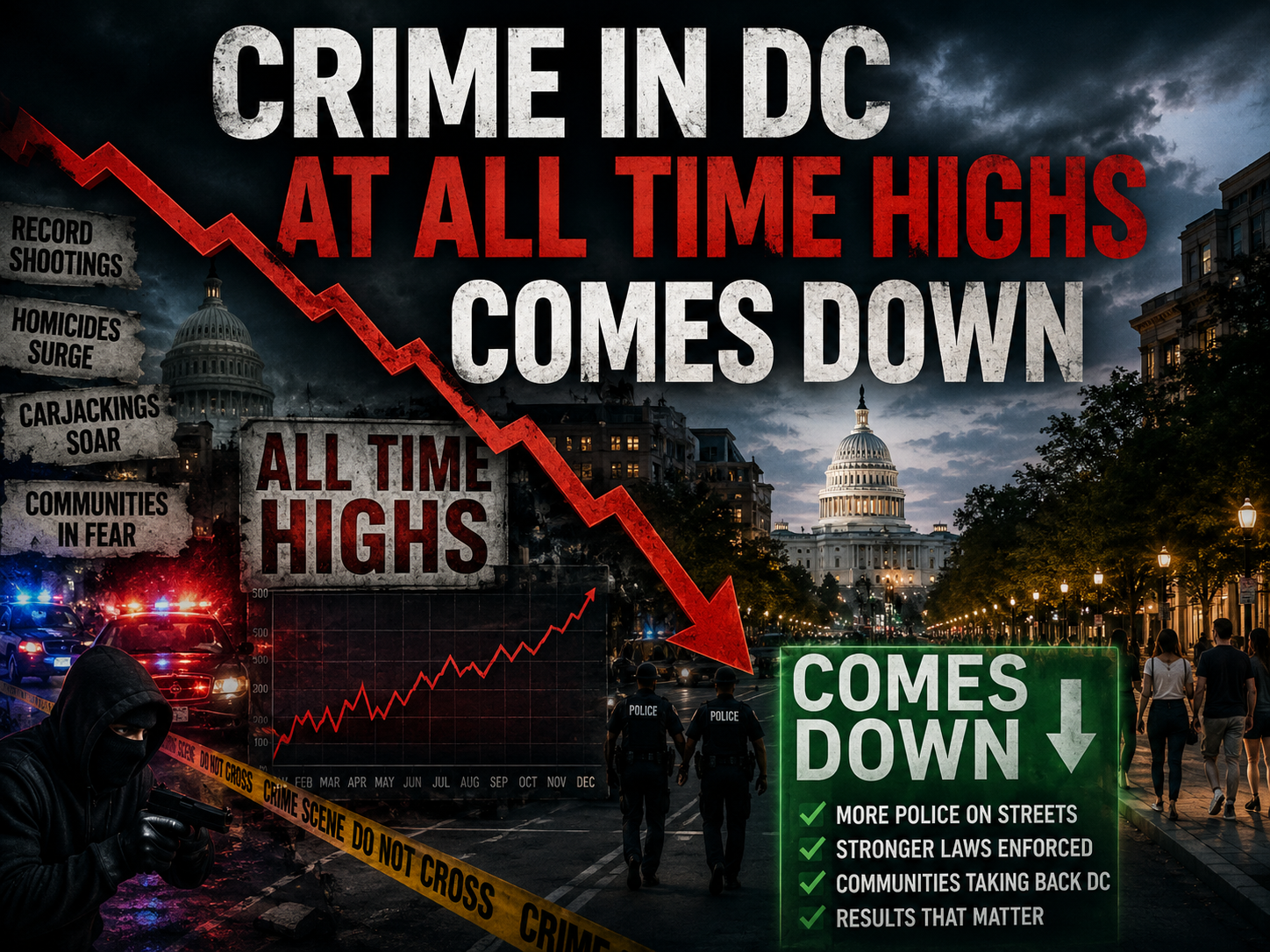
DC National Guard surge didn’t reduce violent crime: Research
The Quick Rebuke
MEDIA COVERAGE
MisleadingReaders of this article came away knowing that a think tank found the National Guard reduced property crime but not violent crime. What they deserved to know is that DC's violent crime had already fallen 35 percent in 2024 — before the Guard arrived — because congressional pressure in 2023 finally forced a broken prosecution system, a three-year-old unaccredited crime lab, and a depleted police force to start functioning again. The Guard debate is a political argument about credit. The actual story is about institutional failure, accountability deferred, and 274 people killed in a single year while officials waited for someone to make them do their jobs.
The Main Claim
What They Got Right
What Needs Context
The article states that violent crime was "already on a downward trend before the guard was deployed." This is technically accurate but profoundly incomplete. The decline was not a natural correction from a pandemic-era spike. It was the direct result of MPD's enforcement strategy changing in late 2023 — narcotics arrests up roughly 150 percent, traffic interdictions up roughly 100 percent, homicide clearance rates rising from 52 percent to 82 percent — all documented in the same Niskanen study the article is summarizing. None of that appears in the article.
The article frames the cost comparison as Guard versus MPD officers without noting that the Guard deployment cost had already exceeded $330 million by early 2026 and was projected to reach or surpass $600 million by August 2026 — a figure that would exceed MPD's entire annual operating budget. The $185 million figure the article uses reflects only the first five months.
The article quotes the Niskanen study's conclusion that the Guard "was not a waste" without giving readers the analytical framework that produced that verdict — namely, that a comparable investment in targeted hotspot policing was estimated to produce social benefits roughly 35 times greater per dollar spent.
Missing Facts
The single most important missing fact is the DC Department of Forensic Sciences collapse. From April 2021 through late 2023, DC's $210 million crime lab operated without accreditation after its firearms unit was caught concealing errors and misrepresenting findings to its accreditation board. The lab's director was a Bowser appointee. During those nearly three years, the US Attorney's office could not test drug evidence, contributing directly to a prosecution declination rate that hit 67 percent in fiscal year 2022 — meaning two out of every three arrests went unprosecuted. The lab did not apply for reaccreditation until September 2023, and only after two rounds of congressional hearings that publicly humiliated city officials. The firearms unit remained unaccredited until after the Guard arrived. This chain of events — lab failure, prosecution collapse, enforcement vacuum, crime spike, political pressure, institutional repair, crime decline — is the causal architecture of the story The Hill is covering. It appears nowhere in the article.
Also missing: the resignation of MPD Chief Pamela Smith in December 2025, days before a House Oversight Committee report alleged she had pressured commanders to downgrade felonies to non-public intermediate offenses to suppress reported crime figures. A separate DOJ investigation described a "culture of coercive fear" around crime data reporting under her leadership. For an article evaluating whether the Guard reduced crime, the reliability of the crime statistics used to make that determination is not a sidebar issue.
Also missing: the DC Council's 2020 police budget cuts — made over Bowser's written objection — which contributed to MPD losing roughly a third of its effective patrol force between 2021 and 2024. The staffing collapse and the crime spike that followed are directly connected, and the political context of how that happened is essential to understanding why the Guard was deployed in the first place.
Also missing: the national crime trend. Violent crime fell in cities across the country in 2024 and 2025 regardless of whether they deployed National Guard troops. Independent crime analyst Jeff Asher documented that carjackings in DC were already down 64 percent in July 2025 — the month before the Guard arrived. Any honest evaluation of the Guard's contribution requires acknowledging that DC was riding a powerful national tailwind.
Our Analysis
The structural problem with this article is that it treats a think tank study as the story when the study is actually a lens through which a much larger story becomes visible. The Hill assigned a reporter to summarize a 54-minute research paper and produced an 11-paragraph piece that accurately reflects the paper's headline finding while discarding everything that gives that finding meaning. The result is a piece that serves the current political debate — Guard supporters versus Guard skeptics — rather than the public interest.
The framing choices compound the problem. By leading with "the Guard didn't reduce violent crime," the article implicitly accepts the administration's premise that the Guard deserves credit or discredit for DC's overall crime trajectory. The Niskanen study itself does not accept that premise — it explicitly argues that the violent crime decline was driven by MPD's strategic shift, which predated the Guard by nearly two years and was itself driven by political pressure applied in 2023. The article never engages with that argument.
The sourcing is also notably thin for a policy piece. The article relies entirely on the Niskanen study and a brief reference to the administration's expansion plans. No independent criminologists are quoted. No DC officials respond. The data reliability controversy surrounding Pamela Smith's resignation — directly relevant to any evaluation of DC crime statistics — goes unmentioned despite being widely reported at the time and directly relevant to the numbers the article is treating as settled fact.
What makes this critique worth writing is not that The Hill published inaccurate information. It is that the article is accurate in the way that a weather report is accurate when it tells you it rained without mentioning that the city's flood control infrastructure had been deliberately dismantled for three years by officials who are now taking credit for mopping up.
The Bottom Line
Readers of this article came away knowing that a think tank found the National Guard reduced property crime but not violent crime. What they deserved to know is that DC's violent crime had already fallen 35 percent in 2024 — before the Guard arrived — because congressional pressure in 2023 finally forced a broken prosecution system, a three-year-old unaccredited crime lab, and a depleted police force to start functioning again. The Guard debate is a political argument about credit. The actual story is about institutional failure, accountability deferred, and 274 people killed in a single year while officials waited for someone to make them do their jobs.
Sources
- 1. Primary Study Niskanen Center — Washington DC's crime decline and its lessons for American policing
- 2. Crime Statistics MPD District Crime Data at a Glance
- 3. Crime Lab Failure DC Auditor — DC Forensics Lab Fails to Achieve Independence (December 2022)
- 4. DCist — DC Crime Lab Regains Partial Accreditation (December 2023)
- 5. Data Reliability / Smith Resignation House Oversight Committee — Leadership Breakdown: How DC's Police Chief Undermined Crime Data Accuracy (December 2025)
About the Author
Don Keyhoetea
Don Keyhoetea writes for Rebuke Nation, an independent publication focused on media analysis, political framing, and source-based accountability.
Never miss a critique.
Subscribe to our RSS feed and get every new fact-check and media analysis delivered directly to your reader — no algorithm, no noise.