
The Colbert Blackout Story Is Real. HuffPost's Framing of It Isn't.
By Don Keyhoetea · May 27, 2026 · 6 min read
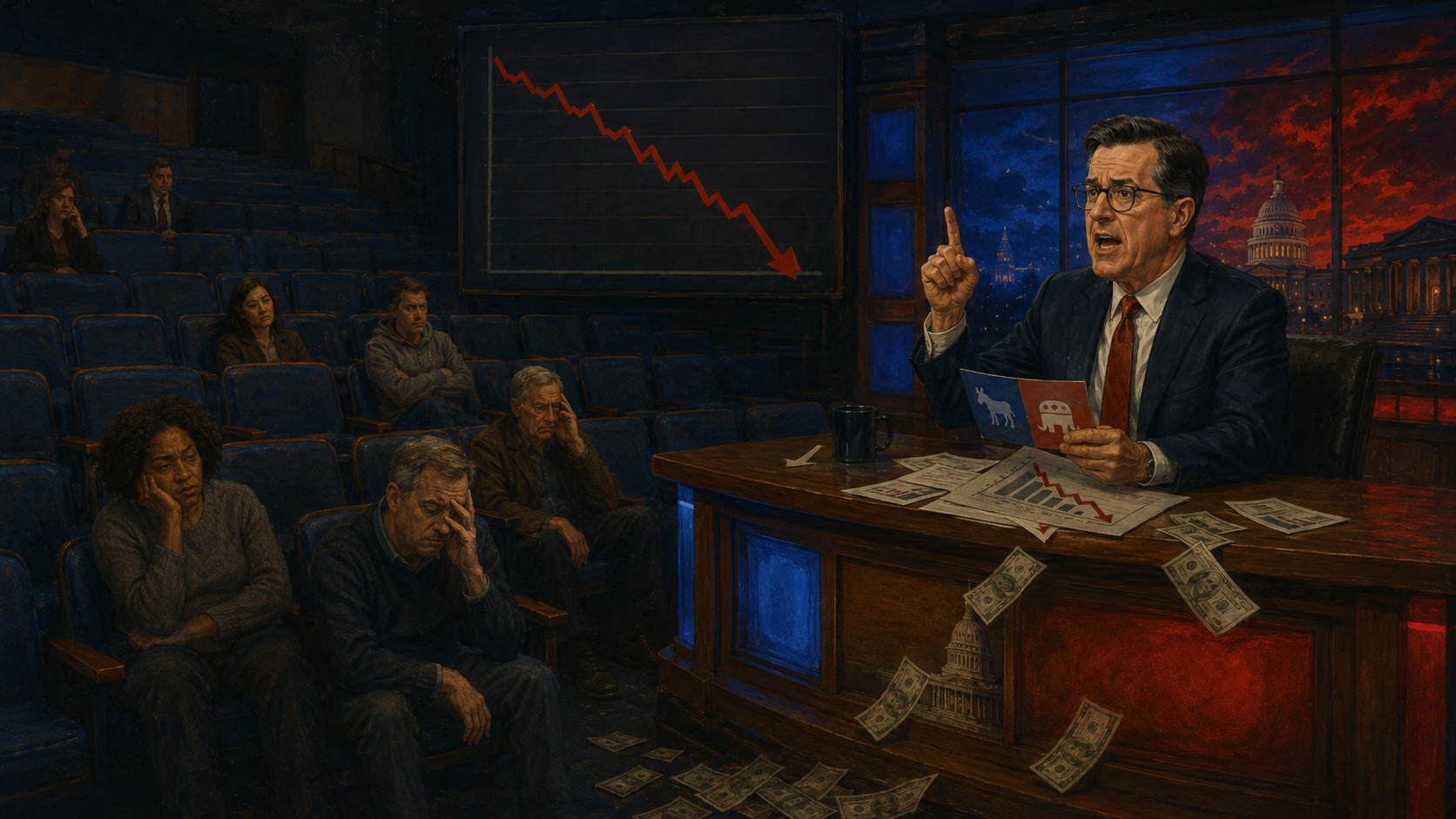
'Colbert' Finale Wasn’t Mentioned On 'CBS Mornings' The Next Day For Petty Reason: Report
The Quick Rebuke
HUFFPOST'S COVERAGE
MisleadingHuffPost reported a real event and called it petty in a headline attributed to no one. It dismissed a documented $40-50 million annual loss as a corporate talking point. It replaced an examination of CBS News's institutional grievance with an appeal to Colbert's fan base. It presented "most assume" as a credible counter to documented financial reporting. The morning show blackout may have been petty. It may also have been a rational response by a news division that publicly defended a colleague who then attacked them on air — made in the context of a show that had been commercially unsustainable for years regardless of who was in the White House. HuffPost gave readers one of those readings, put quotation marks around a word no one said, and called it a report.
Huffpost's Main Claim
What They Got Right
What Needs Context
Problem 1: "Petty" Belongs to Nobody
HuffPost's headline reads: "'Colbert' Finale Wasn't Mentioned On 'CBS Mornings' The Next Day For Petty Reason: Report."
The word "petty" appears in quotation marks — a journalistic convention that signals attribution to a source. It is attributed to no one in the piece. Belloni's Puck report, the sourcing for the entire story, does not use the word "petty." The phrase "CBS News's final middle finger to Colbert" comes from Belloni — but "petty" is HuffPost's own editorial characterization inserted into a headline formatted to look like a quote.
This is not a minor stylistic issue. "Petty" tells readers how to feel about Cibrowski's decision before they read a single fact. Whether the decision was petty or reasonable depends entirely on context HuffPost does not provide.
Problem 2: The CBS News Grievance Is Dismissed Without Examination
HuffPost writes: "Although it is unclear which CBS source spoke to Belloni, fans of Colbert likely didn't view the sketch ridiculing the network as 'unprovoked.'"
This sentence does two misleading things simultaneously. First, it casts doubt on Belloni's sourcing — "unclear which CBS source" — without any basis for that skepticism. Belloni is the founder of Puck, one of the most credible media newsletters in the industry. His sourcing on CBS internal matters has been consistently reliable. Casting vague doubt on it without a specific reason is a framing move, not a reporting observation.
Second, and more critically, it reframes the grievance question entirely around Colbert's fans rather than around CBS News as an institution. Whether Colbert's fans found the sketch provoked is irrelevant to whether Cibrowski's response was justified. The relevant question is: did CBS News have legitimate grounds to feel blindsided? The answer is documented. The CBS News unit had publicly supported Colbert following his cancellation and in his battle with the FCC — and Colbert then produced a sketch mocking their anchor's professional embarrassment on national television. That is a specific sequence of events — support, then public attack — that constitutes a coherent institutional grievance regardless of what Colbert's fans think about it. HuffPost replaced that examination with an appeal to fan sentiment.
Missing Facts
The Cancellation Framing Dismisses the Financial Case in One Clause
HuffPost writes: "Although CBS has insisted that pulling the plug on its 'Late Show' franchise last summer was 'purely a financial decision,' most assume that Colbert got axed because the network needed to appease Trump."
The word "although" does the work here. It structurally subordinates the documented financial case — treating it as the official story to be disbelieved — and elevates "most assume" as the more credible reading. "Most assume" is attributed to no one. It is HuffPost asserting majority opinion without evidence.
The financial case is not a corporate talking point. It is documented across multiple independent outlets. The Late Show was losing $40 to $50 million annually. Late-night ad revenue across all networks fell from $439 million in 2018 to $220 million in 2024 — a 50% collapse — with CBS insiders describing the situation as "cratering." Viewership fell from a peak of 3.1 million in the 2017-2018 season to 1.9 million in the final season. By January 2026, the key 25-54 demographic was averaging roughly 285,000 viewers — on track for its worst performance ever in the category advertisers actually pay for. Samantha Bee, a fellow progressive comedian, called the cancellation a "no-brainer" given the financial losses. Jay Leno said directly: "Why shoot for just half an audience all the time? I just don't think anybody wants to hear a lecture."
HuffPost had access to all of this. It dismissed the entire financial picture with the word "although" and replaced it with "most assume."
Our Analysis
The piece describes Colbert's political content as the implicit reason CBS needed to appease Trump. What it does not tell readers is that the show's political content was also a documented driver of its audience erosion long before any merger was on the table.
Colbert made 3,639 jokes about Trump from January 2023 to the show's end — an average of more than four per episode. His audience was structurally skewed: 47% Democrat, 17% Republican, 31% independent — a targeting decision that limited the show's commercial ceiling regardless of any political pressure from above. The show peaked at 3.8 million viewers during Trump's first term when anti-Trump content was commercially valuable, then declined steadily as that market saturated and younger viewers left linear television entirely.
HuffPost frames the political content as a virtue that got Colbert punished. The ratings and financial data suggest it was also a strategic choice with commercial consequences that were accumulating independently of any Trump pressure. Both things can be true simultaneously. HuffPost presented only one of them.
The Bottom Line
HuffPost reported a real event and called it petty in a headline attributed to no one. It dismissed a documented $40-50 million annual loss as a corporate talking point. It replaced an examination of CBS News's institutional grievance with an appeal to Colbert's fan base. It presented "most assume" as a credible counter to documented financial reporting. The morning show blackout may have been petty. It may also have been a rational response by a news division that publicly defended a colleague who then attacked them on air — made in the context of a show that had been commercially unsustainable for years regardless of who was in the White House. HuffPost gave readers one of those readings, put quotation marks around a word no one said, and called it a report.
Sources
- 1. CBS Mornings Skipped Late Show Finale Coverage Over Colbert's Tony Dokoupil-Bari Weiss Joke — The Wrap, May 27, 2026 (additional corroboration)
- 2. CBS Canned 'The Late Show' Over Tens of Millions in Financial Losses Annually — New York Post via Yahoo, July 18, 2025 (primary source for $40-50M annual loss figure, "melting ice cube" characterization)
- 3. Inside CBS' 'Agonizing Decision' to Cancel Colbert's Top-Rated Late-Night Show — CNN Business, July 18, 2025 (ad revenue collapse from $439M in 2018 to $220M in 2024 — 50% decline; "cratering" insider quote)
- 4. Why Stephen Colbert's 'Late Show' Ended: Ratings Decline, Politics or the Death of Late Night? — MSN, 2025 (overall late-night revenue from $440M to $200M over decade; former CBS VP confirms structural decline)
- 5. Jay Leno Says Today's Late-Night Hosts 'Alienate' Half the Audience — AOL / Parade, July 2025 ("Why shoot for just half an audience all the time? I just don't think anybody wants to hear a lecture" — Leno quote)
- 6. CBS Suspends Takedowns Targeting Colbert's Final Trump Jab — Morning Honey, May 25, 2026 (CBS sent takedown notices for Colbert's Michigan public-access appearance; suspended after backlash — the more substantive corporate interference story)
About the Author
Don Keyhoetea
Don Keyhoetea writes for Rebuke Nation, an independent publication focused on media analysis, political framing, and source-based accountability.
Never miss a critique.
Subscribe to our RSS feed and get every new fact-check and media analysis delivered directly to your reader — no algorithm, no noise.